2025 Champions’ Cup in Jurmala

The 2025 Champions’ Cup was held in Jurmala, just outside Riga in Latvia. I have now been there three times, and I always look forward to it.
This year, our team, the Danish Champions, consisted of Leise Hemberg (team captain), Katrine Martensen Larsen, Julie Marina Sigsgaard and me. Katrine, Julie’s mother, and Leise had just begun their first season together as a partnership.
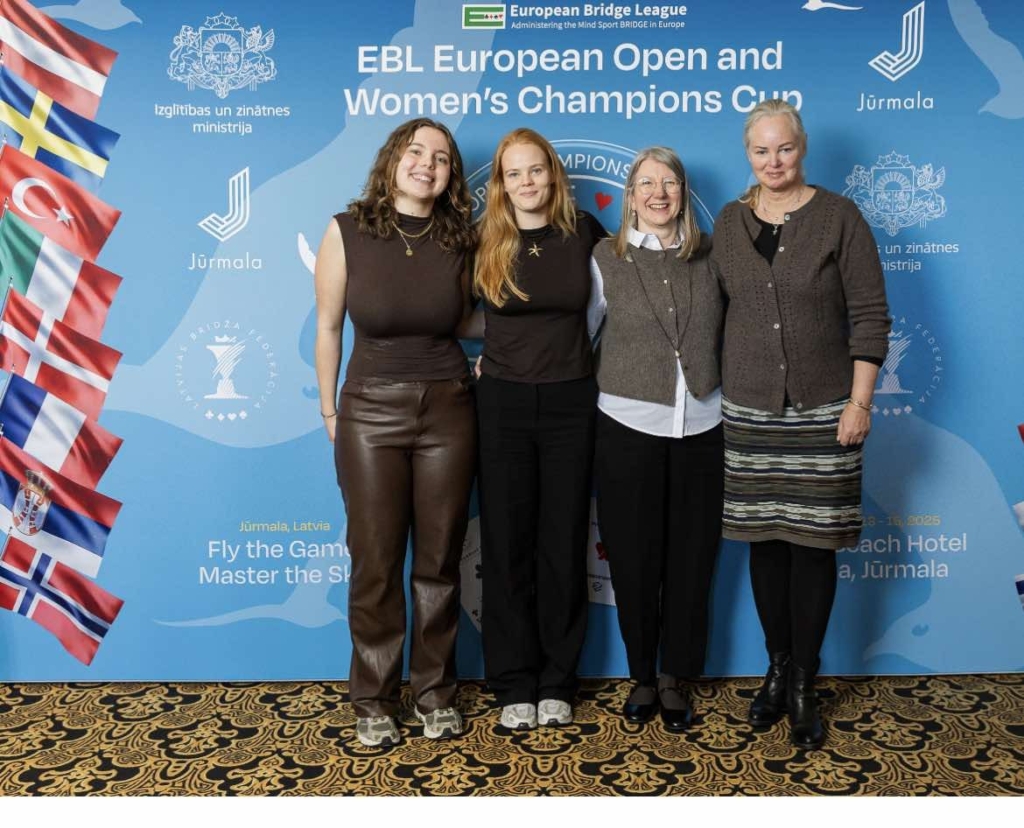
There are 12 teams in each category. Besides our category – the Women –, there is also an Open category. This year, Denmark only had us women representing the red and white colours.
The Women’s category is a bit special as it is not the top 12 countries from the previous European Championships which qualify, unlike in the Open category.
In general, a lot is being done to promote women’s bridge. Three years ago, this tournament started with just 8 teams. This year, there were 12. Participants were the top 8 countries from the European Championships, the host nation (Latvia this year), as well as the gold, silver and bronze medallists from the online European Women’s Championship. The online EC is also an initiative meant to strengthen women’s bridge in Europe. It is held every year – next time 9-11 January –, and can even be played from home.
I encourage all women who have the opportunity to gather a team and participate. It is important to support women’s bridge, all the more since the prize is a place in the Champions’ Cup, which I can warmly recommend.
The atmosphere at this tournament is always quite special. It is a relatively small event with only 2 categories and 12 teams in each, and big efforts are made to hold the event in smaller towns in the host nation. At the same time, it is incredibly cosy. Most people stay at the same hotel, eat at the same restaurants, and know each other from previous years and other tournaments. In that way, it feels both intimate and familiar.
The tournament lasts three days. On the first two days, everyone plays each other in a round robin, with one match against each team. This time, the matches consisted of 10 boards. On the third day, we were divided into semi-final groups so that teams ranked 1-4, 5-8 and 9-12 would meet each other.
A good board played by Katrine
The contract was 4♠ by South, and the auction went as follows:

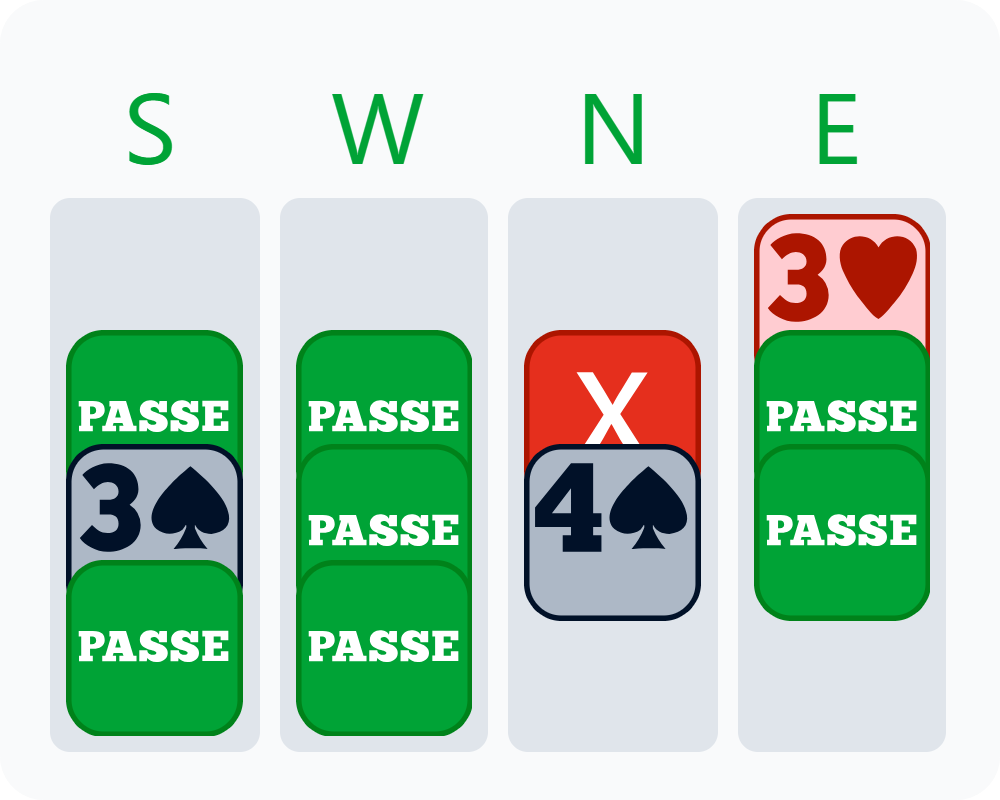
Heart lead to the ace, switch to diamonds, and the king won.
She then played a small spade towards her hand, rose with the ace, and played a diamond to ruff. She continued with a heart to ruff, and now Katrine could draw the remaining trumps.
Since East had opened 3♥ and had already shown three spades, the odds favoured finessing against West’s queen of clubs.
Ten lovely tricks.
Handling a difficult opponent – and a very satisfying extra trick
If there is one thing I struggle with at the bridge table, it is when an opponent behaves badly. I won’t give names – I don’t want to single anyone out –, but I would like to tell you about a board I was quite satisfied with.
The auction went as follows:

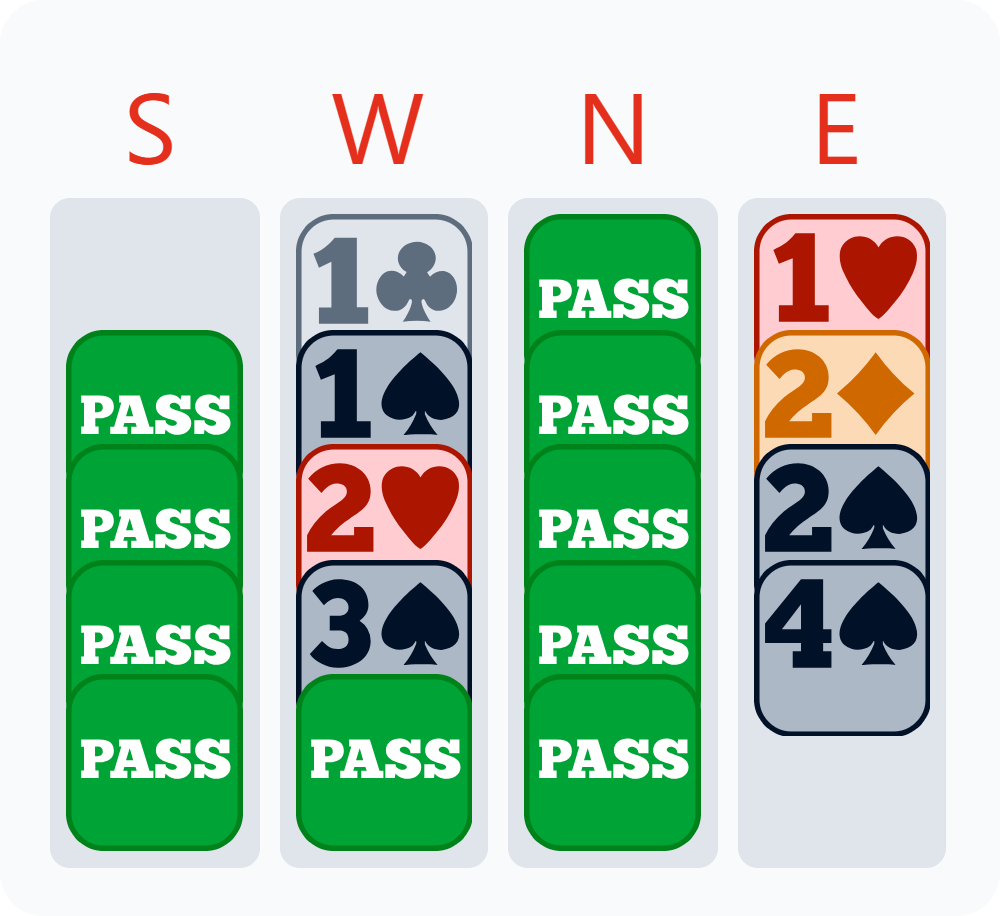
Julie and I play transfers over a 1♣ opening, so 1♥ showed spades.
My 2♦ was xy-NT and therefore game-forcing. After that, I showed my four cards in hearts and then my three spades. Julie placed me in 4♠.
I received the ♦7 lead, then played a spade to the king. It held, so I played the queen of spades next, to the ace, and got another diamond back.
Already on the previous three boards, North had been rushing both her partner and us. We have 100 minutes for 10 boards, which is more than enough – especially since Julie and I usually finish 30 minutes early. So when she started pushing the pace already on Board 1, it didn’t make for the most pleasant match.
I think it is poor form to rush your opponents, especially when we didn’t even waste time. And scolding your partner for thinking certainly doesn’t make them play better. It may be some sort of tactics to try to psych out the opponents, especially if you think you are “just playing against two little junior girls”. I was indeed affected by this, but fortunately not in the way she had probably hoped.
The hand looked like an easy 11 tricks. North thought so too. After I had drawn the trumps and seen that the diamonds behaved, she claimed 11 tricks on my behalf. I politely said that I would like to play the board out.
I usually also claim when it is obvious – it saves time –, but her attitude and the way she tried to dominate the table provoked me a little.
So I continued. She tried again to insist that the contract only had 11 tricks. I became slightly irritated and asked her politely but firmly to relax and let me finish playing the cards. At that point, it was more about principles than tricks.
I ran the diamonds and started taking my trumps, leading to this end position:
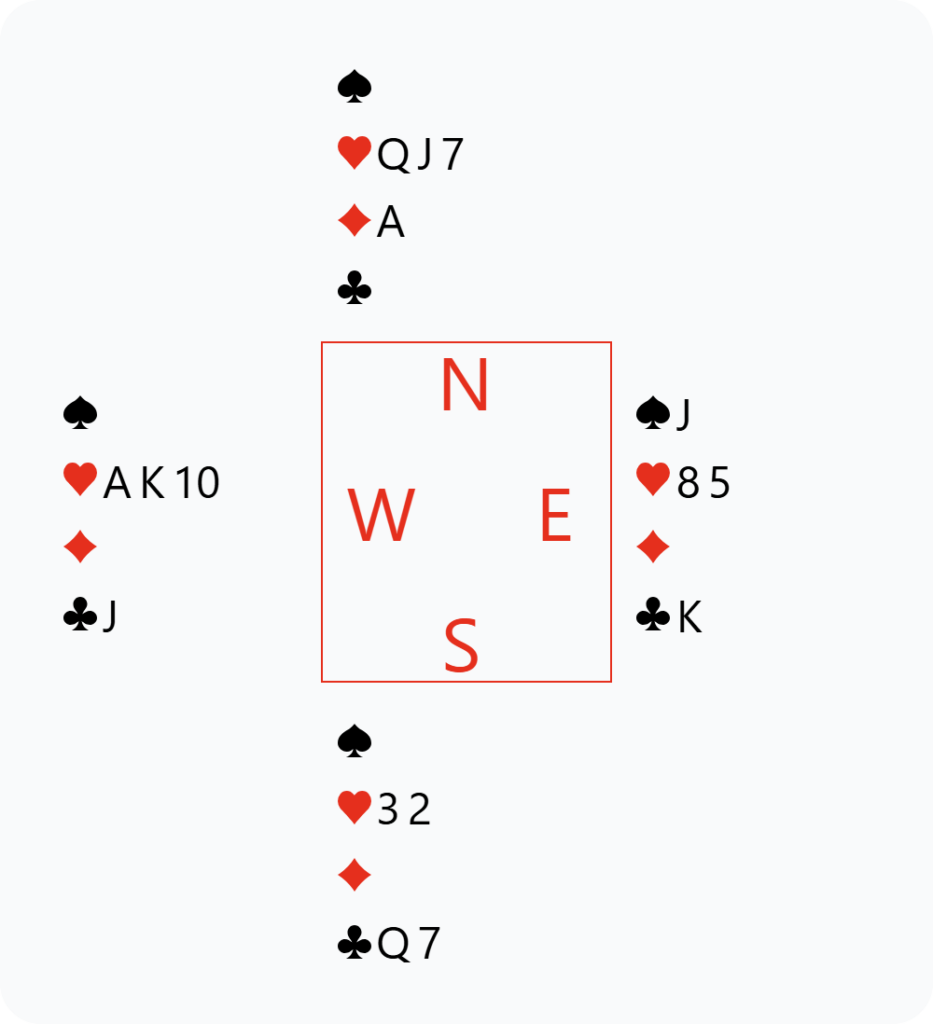
When I now played my last trump, discarding the jack of clubs, North was in trouble.
If she discarded the ♣A, my king would be good. If she discarded a heart, my ♥10 would be good too.
She actually discarded a heart and I took 12 tricks.
I normally do not care much about an extra trick in team events and try to maintain a good atmosphere. But in this case, the extra 12th trick earned us +1 IMP, and it is probably the most satisfying IMP I have ever scored. You can call it karma if you want, but I hope she learned something from it.
A good auction at Leise and Katrine’s table
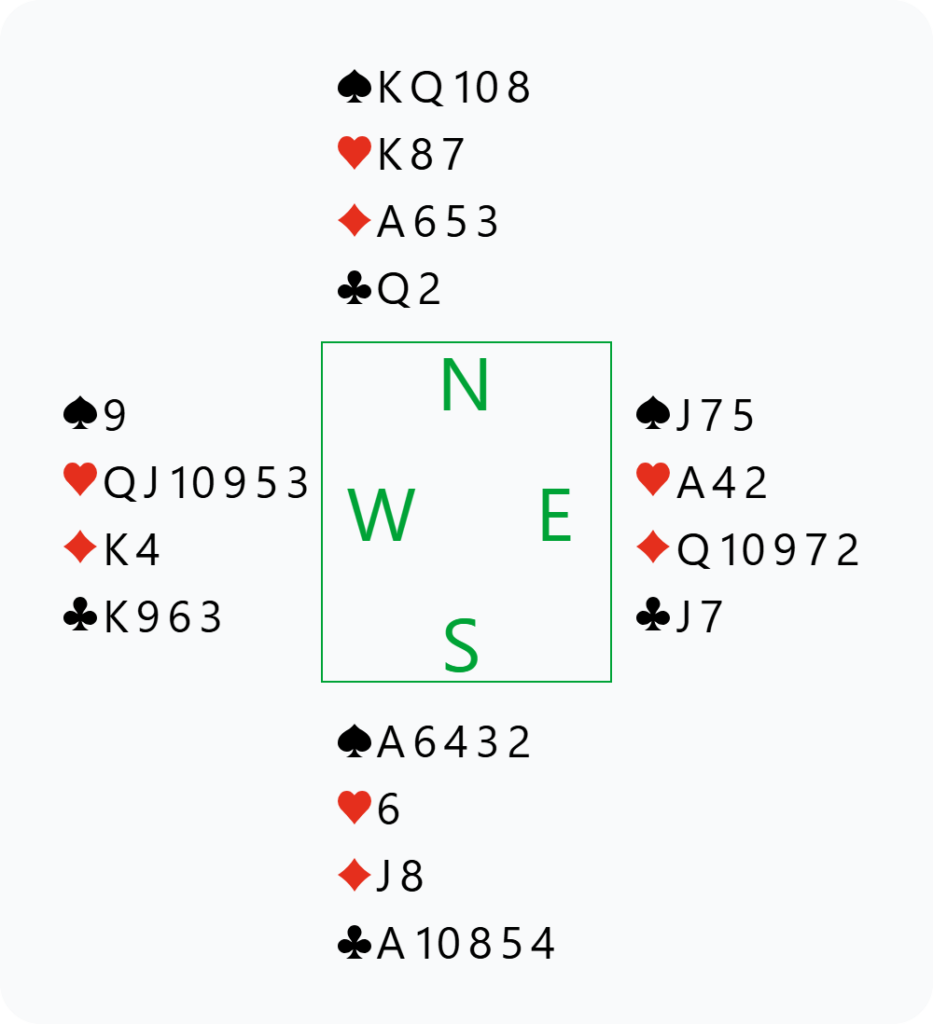
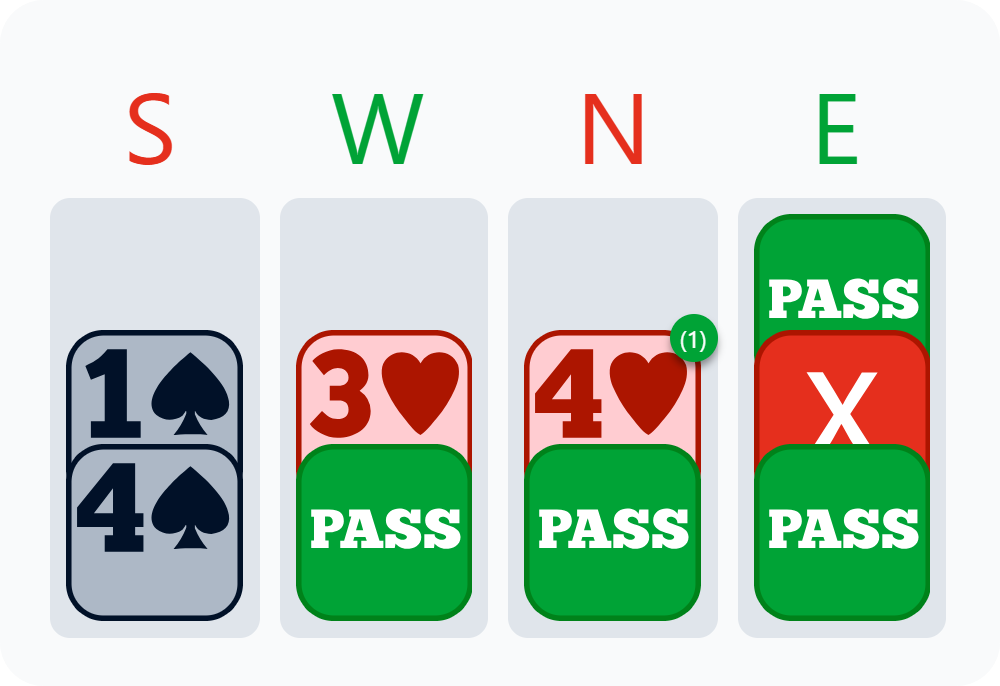
Katrine chose to open South’s hand, where it is difficult to avoid reaching game.
Many players open according to the Rule of 20 (your two longest suits + your HCPs must reach 20). South’s hand is almost there.
A 5-5 hand is often very powerful, especially in trumps.
At my table, they did not open South’s hand, and therefore only reached 3♠. Both contracts made 11 tricks. So the opening bid was good.
A well-played 3NT by Vicky Chediak
I have also chosen a board which I thought my opponents played very well.
Declarer in North was Virginia (Vicky) Chediak from Norway, and the contract was 3NT, which they made without interference.

A small spade lead from the defence can quickly make the hand difficult for declarer, as it gives the defence four spade tricks, and declarer cannot reach 9 tricks before the defence gets in. But many players chose to lead clubs, as a spade lead also seems dangerous from East’s hand.
Vicky began by taking two top diamonds, and it quickly became clear that diamonds were breaking poorly.
The problem is that you must avoid letting West gain the lead. If West wins a trick, spades can be played through, and the contract fails.
To solve this, Vicky had to play the hearts correctly. Without much thought, most players would lead a small heart to the queen after the two top diamonds. But if that loses to the king, you lose an extra heart trick if the honours are split, and the contract goes down.
When she played a small heart from dummy, I also played small, and she put in the 9!
If I held the king of hearts, I might consider going up to play another spade and thus kill the contract.
But it costs nothing to duck from the king as well, since she cannot yet count 9 tricks.
As it was, she did the right thing by playing a small to the 9. From there she could claim 9 tricks, as the hearts were also 3-3, giving her a very good result.
Reflections on this year’s Champions’ Cup
It is not hard to imagine that this year’s championship was not the success we had hoped for.
We entered the tournament with higher expectations, but had to admit that the competition was strong and it simply wasn’t our tournament this time.
Nevertheless, we left the experience with smiles on our faces. It is always fantastic to get out, gain international experience, and forge new friendships across borders.
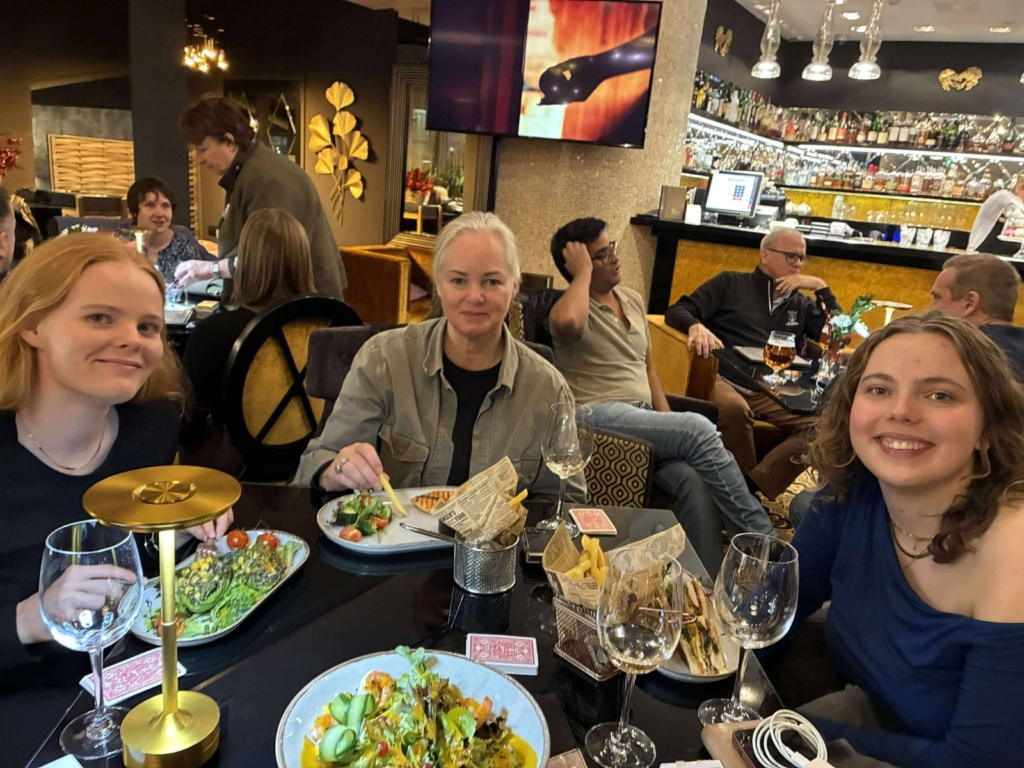
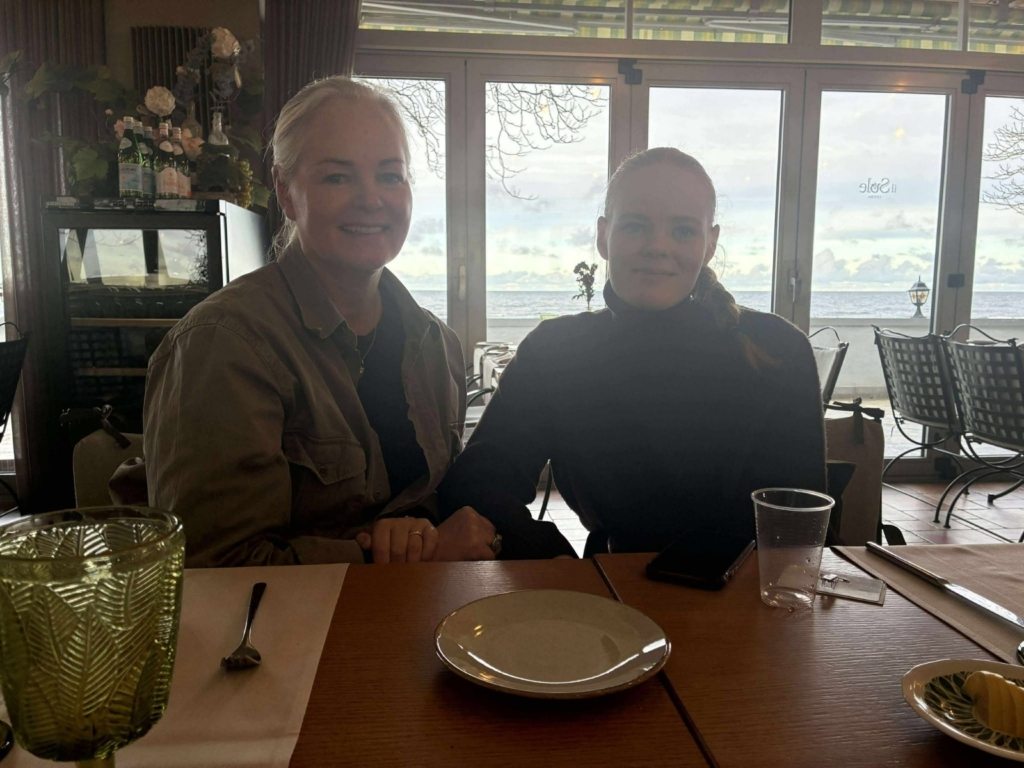
The tournament ended with the prize-giving ceremony for the winners, fireworks, a cake and dancing later in the hotel lobby.
As the EBL wrote on their Facebook page:
“It’s even more than the fact that over half of the participants were women, and beyond the remarkable milestone of having a fully established women’s category in an event where, just 3 years ago, no one imagined it could happen. The real story is the incredible women’s community that grows stronger with every event, placing Women’s Bridge firmly on the map!”
By supporting women’s bridge, we are not only helping to strengthen the game, but we are also getting stronger.
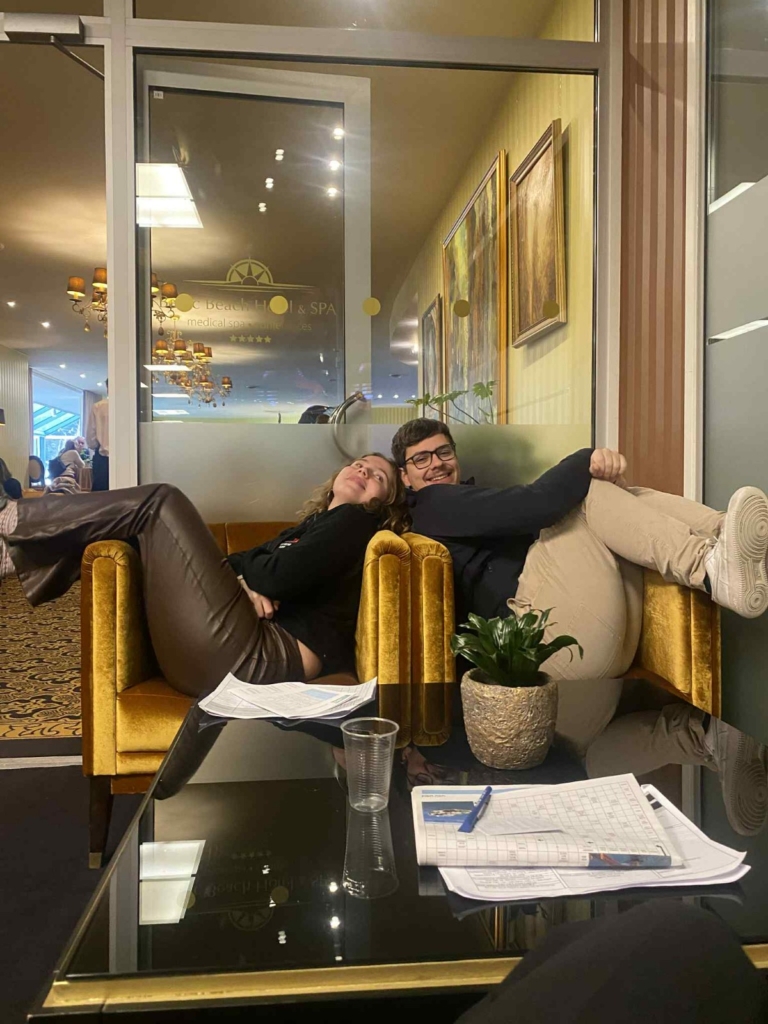
The community the EBL describes is something we feel very clearly when we stand in the playing hall, share a laugh over a misunderstood bid, or cheer on another women’s team battling beside us. It feels like a small but strong community where everyone contributes, whether you win, lose or are simply trying your best.
As more women step forward, both the competition and the relationships we build across borders grow. Every participating team helps advance women’s bridge, and it makes me both proud and grateful to be part of that development.
For me, it is not only about bridge, but about being part of something that grows stronger every year, something we create together.
We are also very grateful that the Danish bridge federation supports us and makes it possible for us to participate in the Champions’ Cup.
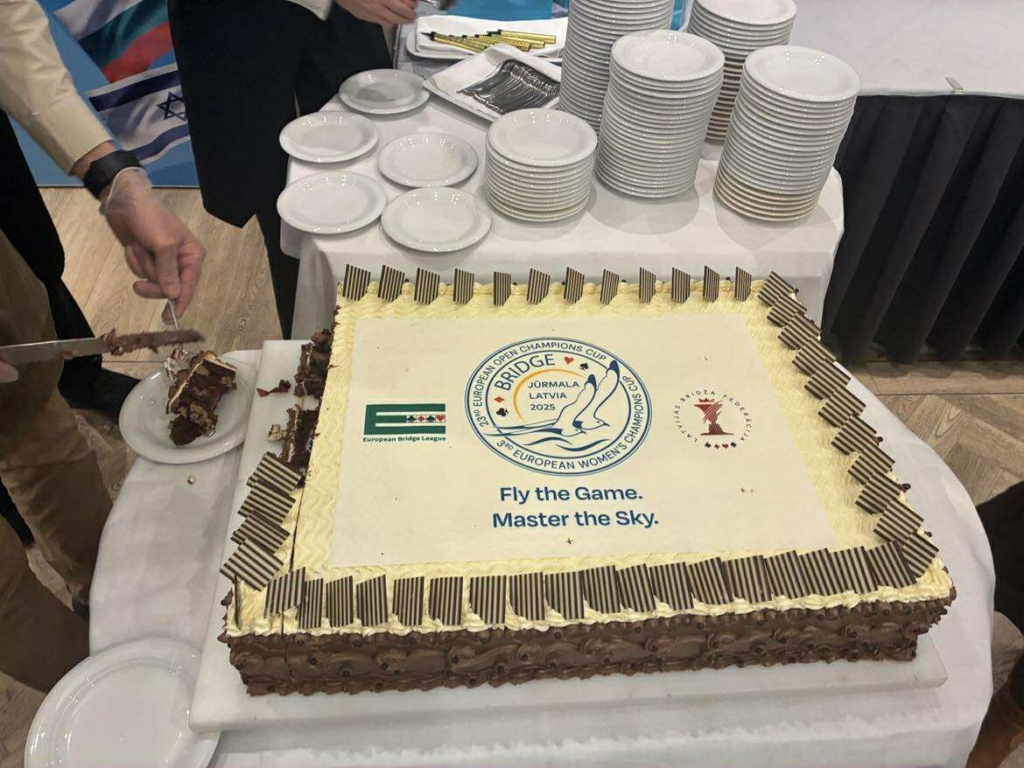
The mantra for this year’s Champions’ Cup was:
“Fly the game. Master the sky.”
And even though we didn’t quite reach the sky this time, we have learned valuable lessons, and hopefully, we will be ready to fly even higher next year.