Marcin, the Polish fox of the bridge world


ID
Funbridge nickname: Sventimir
Nationality: Polish
Playing style: I like to bid in an active, sometimes aggressive way. I hate passing. Over time, I’ve learned moderation, but the desperate contracts I’ve played have shaped a real imagination — the kind that helps you search for a solution even when everything seems lost.
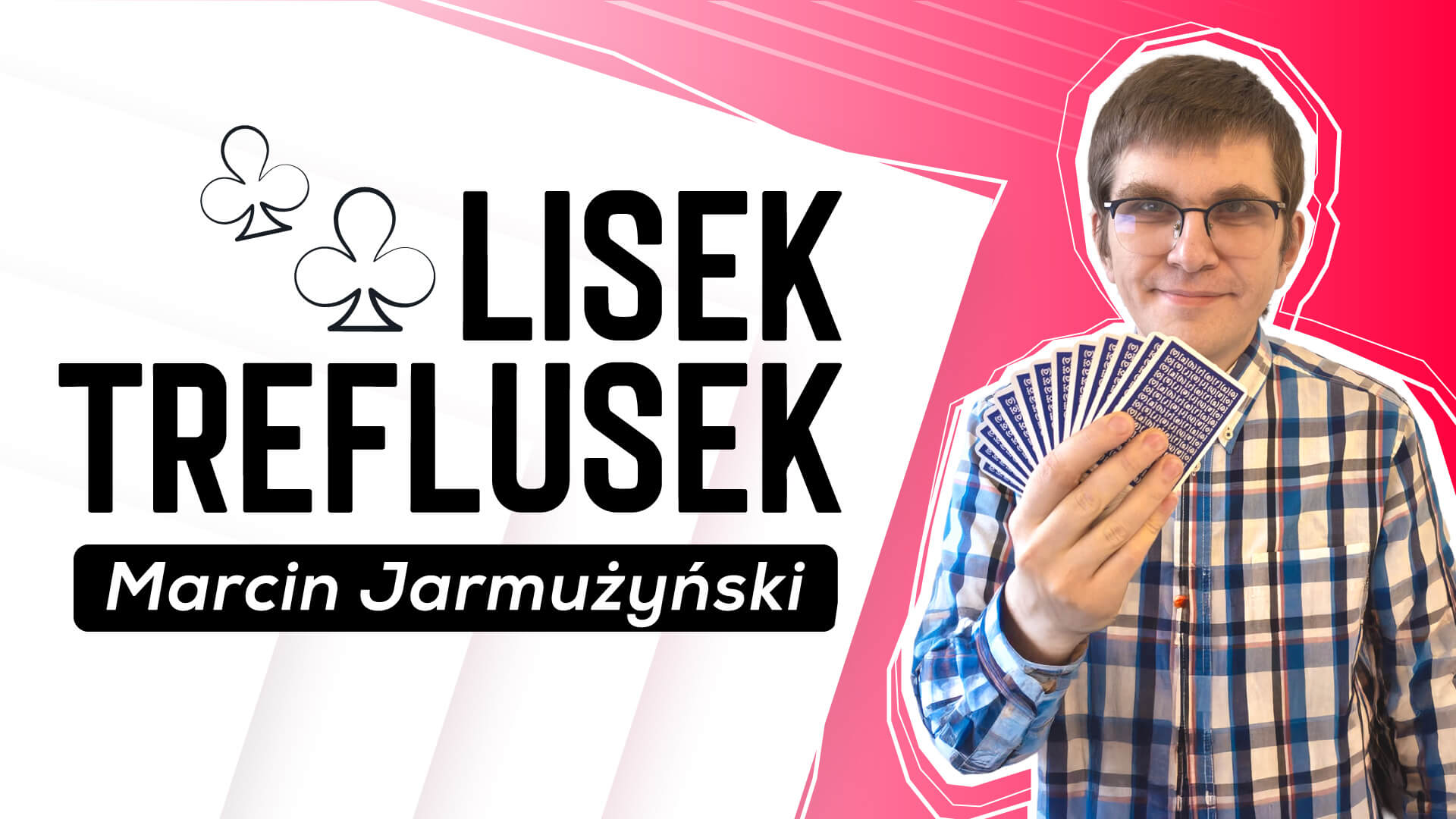
Behind the channel Lisek Treflusek — a wordplay combining “little fox” (lisek in Polish) and “club” (trefl, a term borrowed from French) — stands Marcin Jarmużyński, better known online as Sventimir. Through his videos, he offers a structured and educational deep dive into the bridge player’s thought process: reading the cards aloud, analyzing probabilities, exploring alternative lines of play, and breaking down the key decisions on each deal. His goal is clear: to make the reasoning process accessible to players of all levels, from intermediate enthusiasts to seasoned competitors, highlighting the logic, anticipation, and imagination that make bridge such a rich and fascinating game.
Interview with Marcin Jarmużyński

How did you start playing bridge?
I learned the rules of bridge as a child with my grandfather and father, though I wasn’t truly passionate about it at the time. The real turning point came at university, during a small student tournament. That’s when I got hooked. I started improving seriously — and fifteen years later, I’m still learning.
What would you say to encourage someone to start playing bridge?
For me, bridge is a true teacher of life. It develops observation, logic, imagination, and collective intelligence through communication and cooperation. Few games combine such analytical rigor with such a strong human dimension. Above all, it teaches humility and perseverance, both at and away from the table.
What inspired you to become a bridge influencer?
At some point, I came across several chess streamers on YouTube that I really enjoyed.
I thought it would be great to see the same kind of content dedicated to bridge — live analysis, pedagogy, and a real immersion into the thought process behind each decision.
Since there was very little of that at the time, one idea naturally followed: why not create the channel I would have liked to watch myself?

What’s your best bridge memory?
There’s a classic technique in bridge: discard a loser on a loser. One day, however, I did the opposite — I discarded a winner on a loser.
Playing pairs, I was declarer in 4♥ with only seven trumps, even though 5♣ was cold. After three rounds of spades, I faced a key decision. Ruffing in hand would have meant going down if trumps were split 4–2. So I chose a bold safety play: I sacrificed a trick by discarding a master club to maximize my chances of making exactly ten tricks.
Trumps were indeed 4–2; without that cautious line, I would have gone down. The result? 85% — proof that even in matchpoints, safety can pay off.
Since bridge is always played in pairs, it’s very difficult to measure a player’s individual strength — unlike in chess, for example. Playing with robots, even though it’s quite different from playing with a human partner (especially a regular one), still provides a way to compare players’ individual performance.
What did you think of the article?
If you like the concept or have ideas for future videos for Marcin, feel free to leave him a comment!