The 2026 Mixed Pairs with Léo, Pierre and MKB

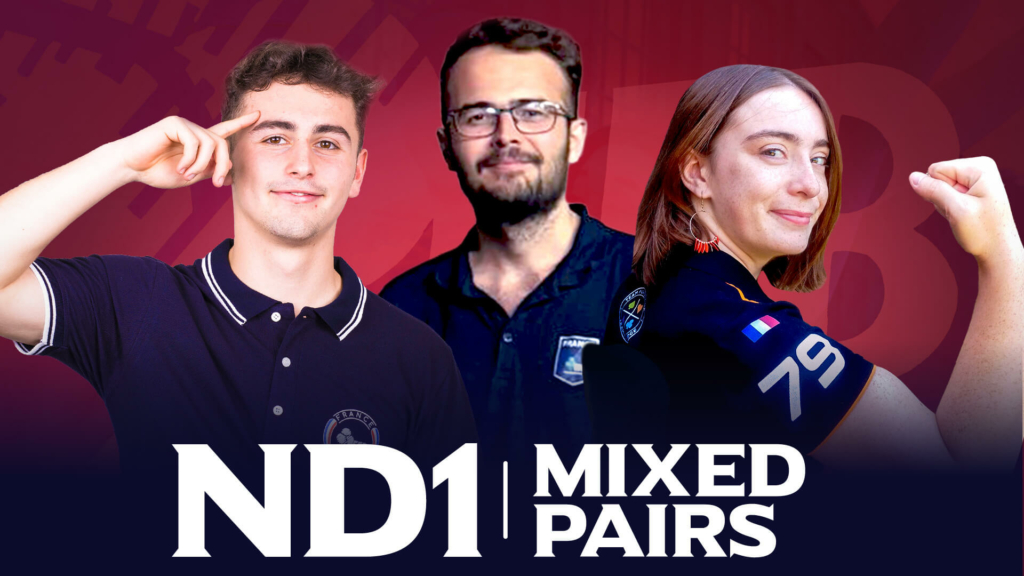
The annual meeting of France’s top mixed pairs
The National Mixed Pairs Division took place recently. This is an event bringing together the best French mixed pairs, contested over two weekends (24-25 January, then 31 January-1 February).
On paper, three pairs started as the favourites: Anne-Laure Tartarin – Quentin Robert, Donatella Halfon – Philippe Cronier, and Sylvie Gombert – Lionel Sebbane.
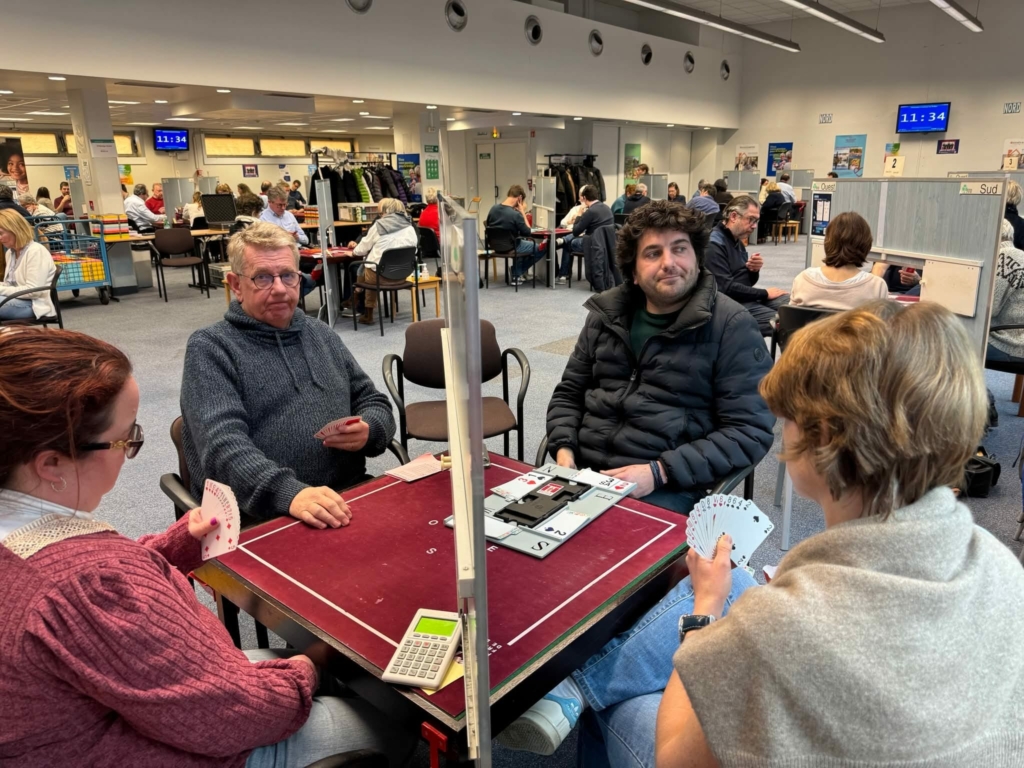
As for me, I was back in the National Division for the fourth year in a row with my partner Luc and on 25 January, it was also my birthday. 🎂
A first deal from MKB
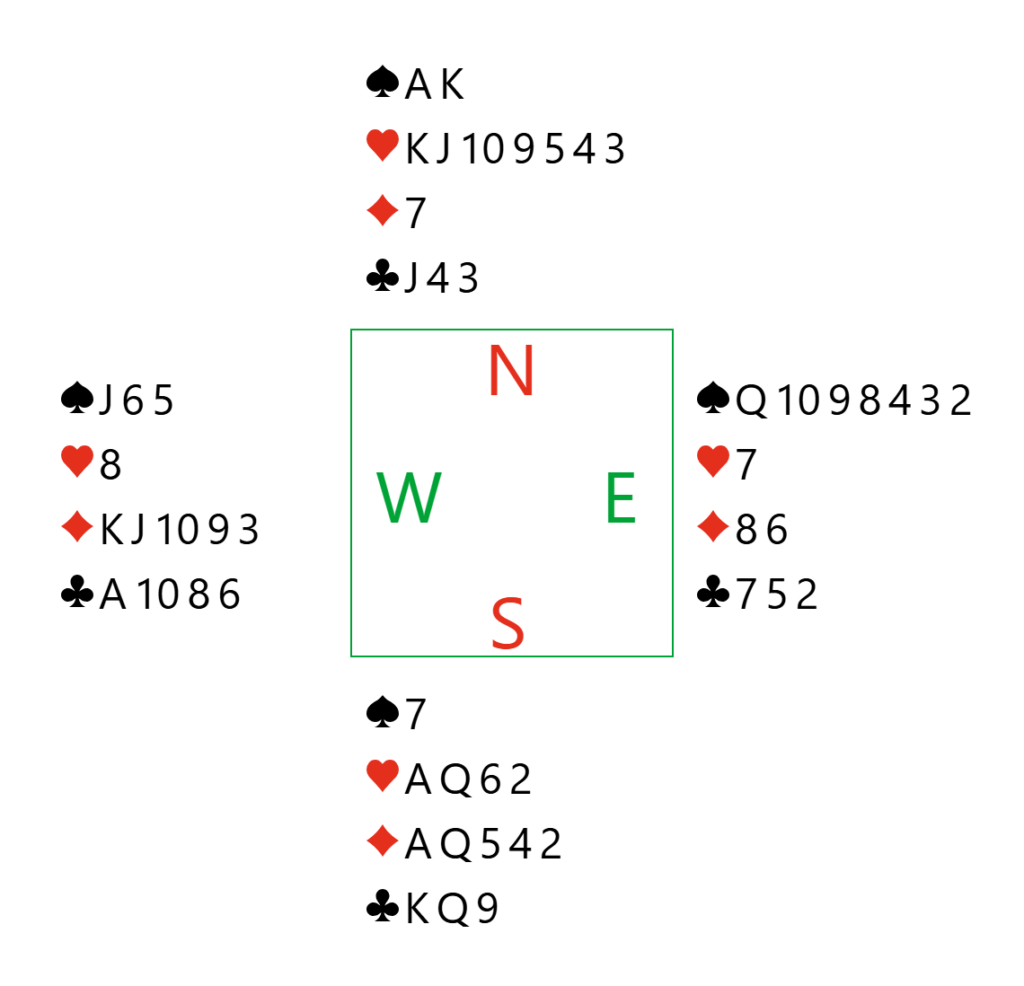
I started with a deal played at a high level against Anaïs, my partner on the French Women’s team, and Léo. I was sitting South, and the auction escalated quickly.
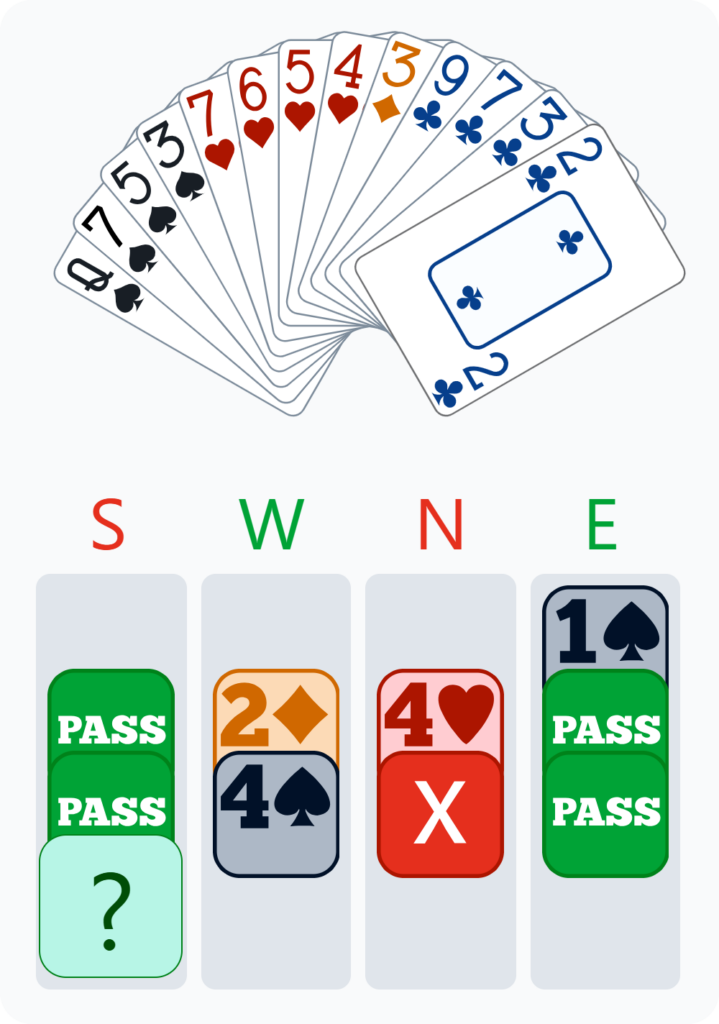
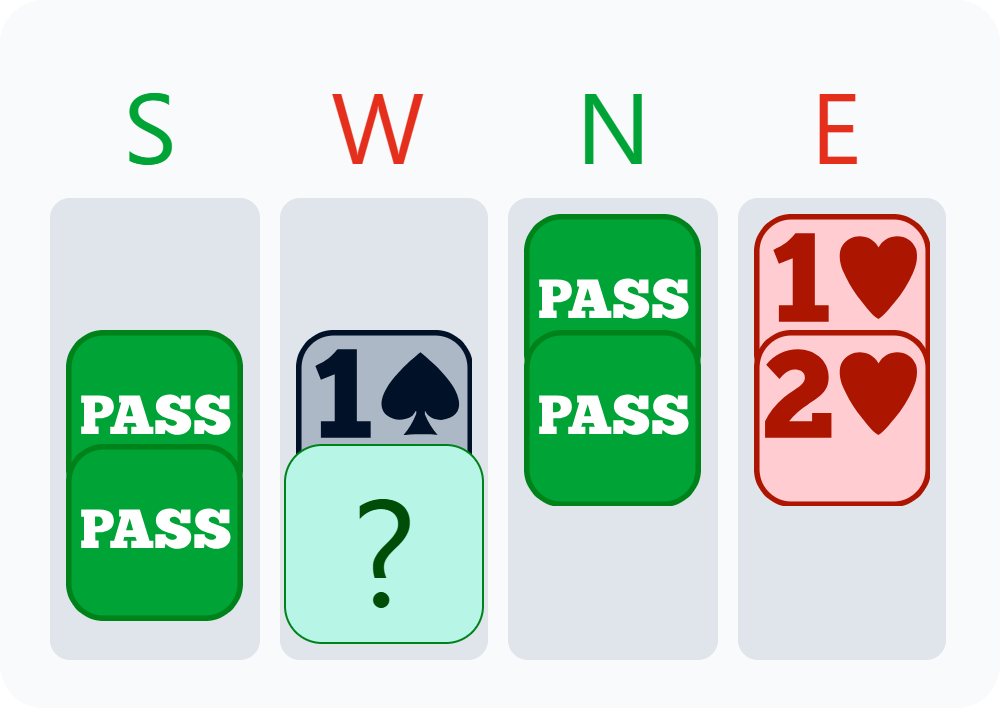
My partner’s double shows a strong 4♥ bid, with a clear intention to bid further. In this context, passing is very rare.
From my side, I know I will support with hearts with four trumps and that I have a shortage in the opponents’ second suit. The question, therefore, is not whether we are going higher, but how to best describe my hand.
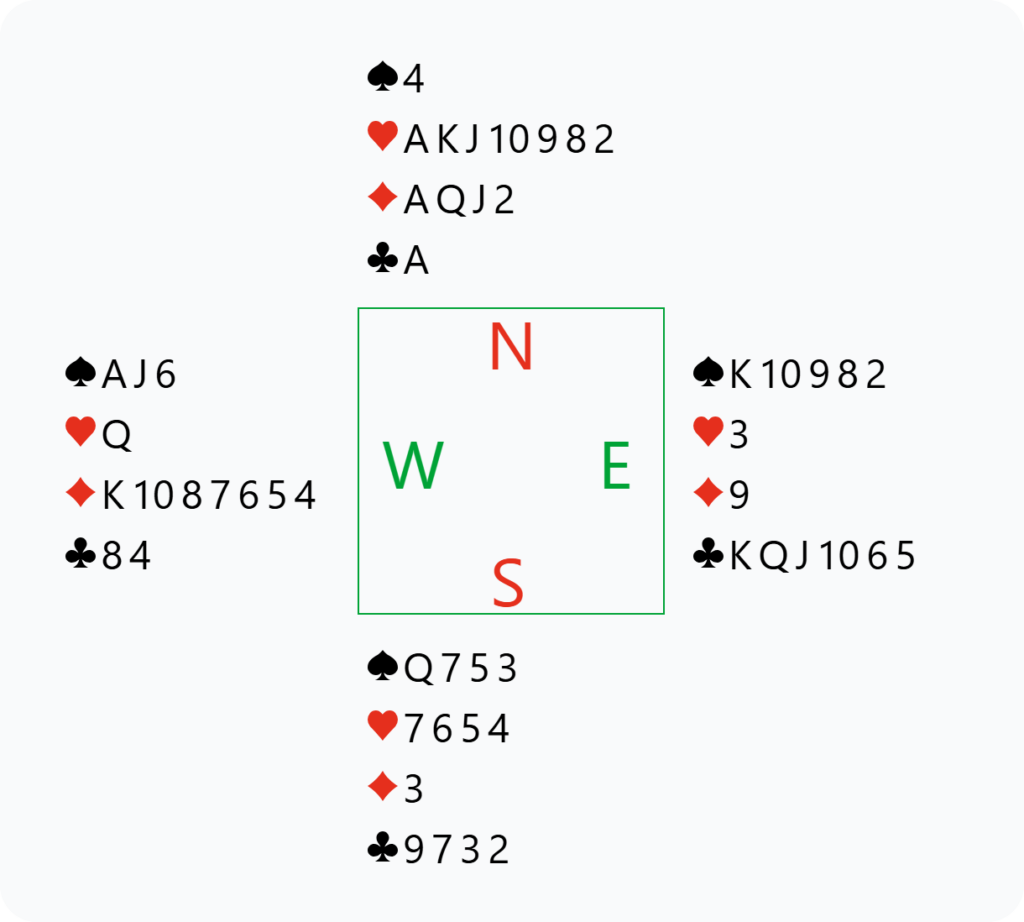
At the table, I foolishly bid 5♥ and as a result, we skewer the slam. In retrospect, the correct bid was clearly 5♦, showing my short suit. That bid left my partner complete freedom, as he was still considering a higher contract, and allowed for a better overall evaluation of the hand.
The four hands:
Two deals from Léo: a balancing double and carnage ensues
My RHO opens 3♣ with only six cards. It’s not going to work out very well for her… but it’s a bid I have some sympathy for: a nice six-card suit and a singleton. I would not have made that bid vulnerable, but green againt green, it’s worth a try. Also, in the latter case, it really is the best bid to steal the contract at pairs.
I pass initially, so does my LHO, and then Anaïs comes in with an excellent winning bid: despite holding five hearts, she chooses to balance with a double, also having three nice spades and, above all, a singleton club. She can reasonably hope for some clubs in my hand and a penalty to collect.
Now I do have four spades and five clubs, but only the 10 and 9. By bidding spades, I’m not even sure of finding a fit; by passing, I’m almost certain to get a plus score, possibly with a good penalty. So I pass, without overthinking it.
Now it’s time to lead. I know the normal lead would be the doubleton heart, but it’s well known that I don’t like doing what everyone else does. I decide to underlead the ace with a spade. (It’s true that in a trump contract we are taught never to underlead an ace, as it may give the king away to the declarer. But in this sequence, declarer has shown very limited values with her pre-emptive opening bid. If my partner doesn’t hold the king, it will almost certainly be in dummy — and declarer will not expect the ace to be with me and will go wrong.)
That’s exactly what happened at the table. After my lead, declarer plays the 10 to Anaïs’s jack. Anaïs returns the king of hearts. I play high to give count, won by the ace. Declarer then plays the king of spades and, to our surprise, Anaïs plays low. She even discards a diamond and realises the deception only when I win with the ace.
At that point, I understand that declarer has one spade, three hearts (since Anaïs doesn’t have six), two or three diamonds, and six or seven clubs — most likely three diamonds and six clubs.
I need to ruff a heart, take the two diamonds, and then have Anaïs return a diamond to put me in an uppercut position with my 10 of clubs, sitting over the opponent. I therefore cash the king of diamonds, which holds, then play another heart. Anaïs wins. I have to ruff a heart, cash the ace of diamonds, and then play a diamond to force declarer to ruff high and establish my 10 of clubs in an uppercut, for +500.
Excellent bidding and defence from Anaïs, earning us a very good score. As for the 3♣ bid, I must admit that I would have done the same… Unfortunately, it did not work out very well.
Muddling up the table to save 3NT
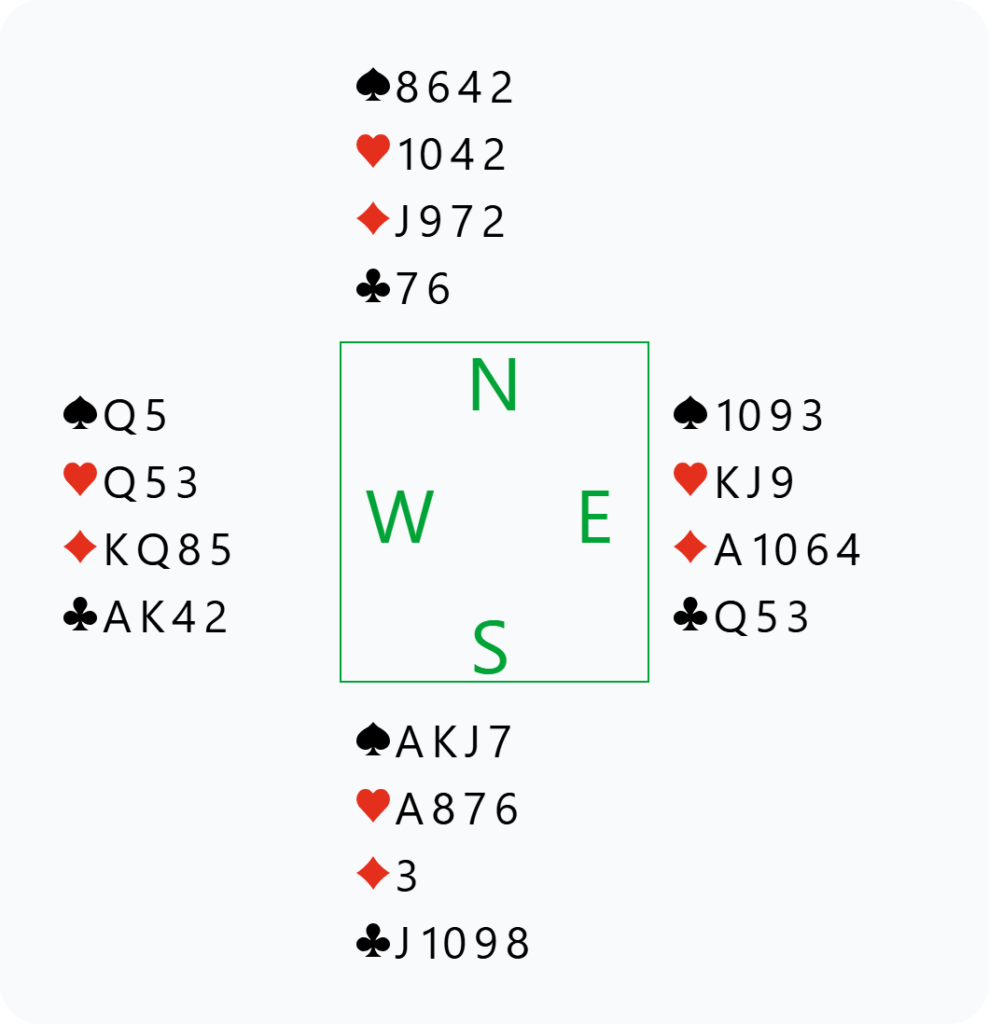
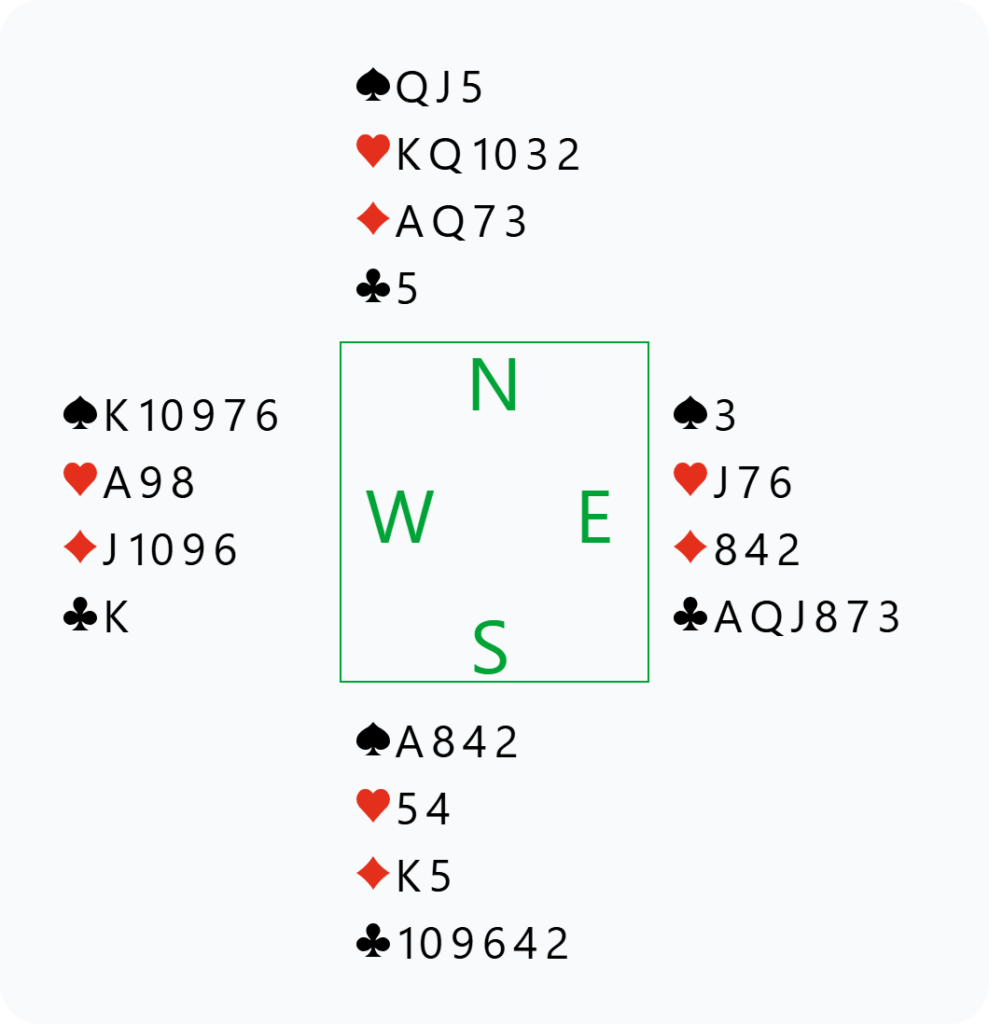
My RHO opens 1♣. I quite obviously bid 1NT, with a club stopper and 16 balanced points (for once I actually have my 1NT bid green againt green at pairs, haha). Anaïs quite naturally signs off in 3NT. My opponent leads the 7 of clubs.
I count three club tricks, probably four diamond tricks, and two heart tricks after driving out the ace of hearts. The only problem is that after the ace of hearts, the opponents can take five tricks before I can reach nine with four spades and one heart. Moreover, with South’s opening, he’s likely to hold the ace of hearts and ace-king of spades. It won’t be difficult for him to return the ace or king of spades once he gains the lead.
I therefore decide to win with the queen of clubs in dummy and play the 10 of spades myself in an attempt to confuse the defence. The opponent wins with the king, sees his partner’s count, but at this stage cannot yet tell whether it comes from two or four cards. He therefore decides to return a club, trying to establish his fourth club.
Perfect! So far, my plan is working out. I win with the king, and now it’s time to establish my two heart tricks. I play a heart to the jack; South wins with the ace. He can still cash the ace of spades and make four spade tricks plus the ace of hearts, but by continuing in clubs, he establishes his club and the ace of spades can serve as an entry to do so. He therefore returns a club, and now I’m able to take four diamonds, three clubs and two hearts without the opponents ever reaching five tricks.
A nice psychological play, right? Knowing that my contract was doomed to go down, I deliberately choose to play my weakest suit to confuse the opponents! This technique must be used with caution and only in very specific situations, but honestly, the few times I have used it, it has worked — and I must admit, these are exactly the kind of plays I love.
Lots of doubles with Pierre and Nathalie…
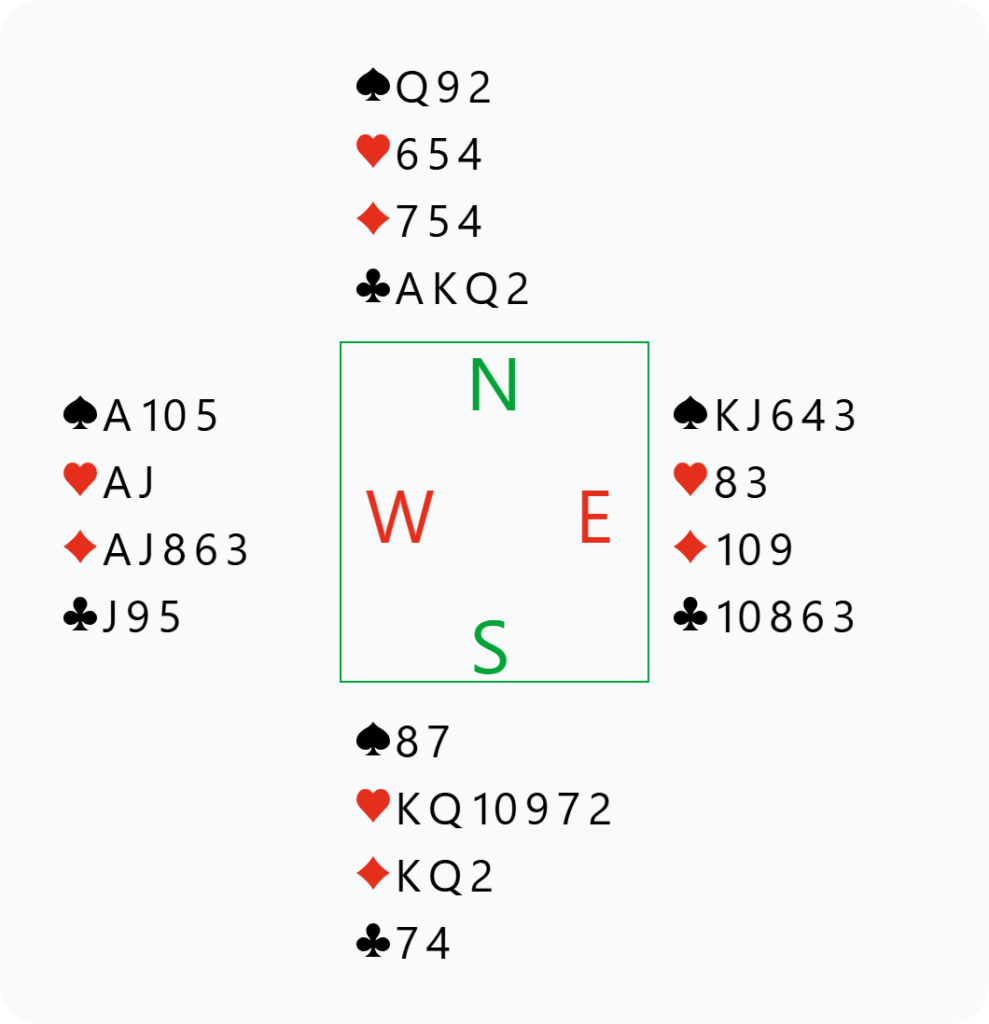
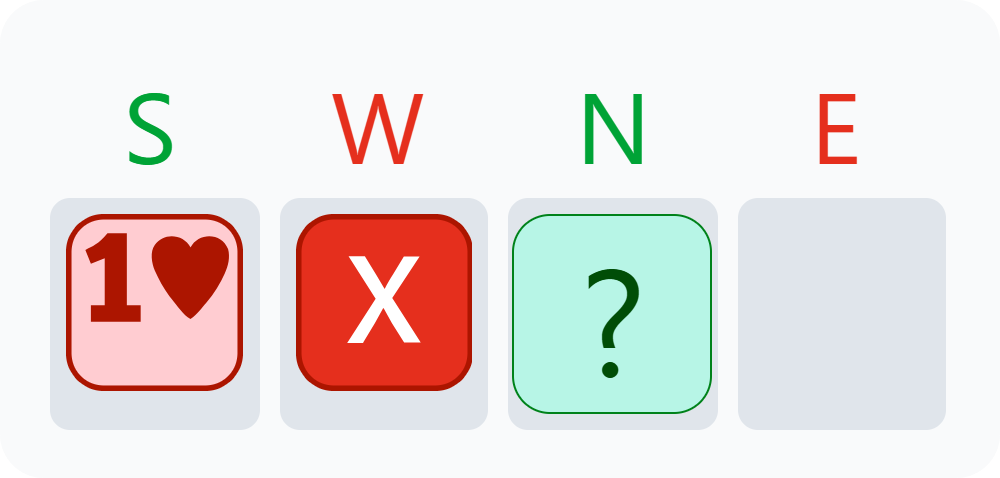
What do you do after the double?
My reasoning is as follows: with 11 HCPs and three hearts, my natural instinct is to support my partner. However, going beyond the 2♥-level with a 4333 hand, a stranded queen of spades, and facing the opponents’ double feels risky.
I therefore choose an alternative. I start by redoubling, which shows at least 11 HCPs and, in principle, denies a heart fit. My objective is to bid 2♥ later on, allowing Nathalie to pass if she is minimum. My LHO bids 1♠, Nathalie extends her hearts with 2♥. Now that I know we have a nine-card fit, passing would be far too pessimistic. I invite to game by bidding 3♥, which brings the auction to a close.
West leads the 5 of clubs. Nathalie cashes her club winners, discarding a spade, then plays the fourth club by discarding her last spade. East, on lead, plays the 10 of diamonds to the king and North’s ace. West continues with a diamond to Nathalie’s queen, who then plays the king of hearts, taken by West’s ace. Nathalie concedes one more diamond trick before being able to claim the rest, the jack of hearts being doubleton.
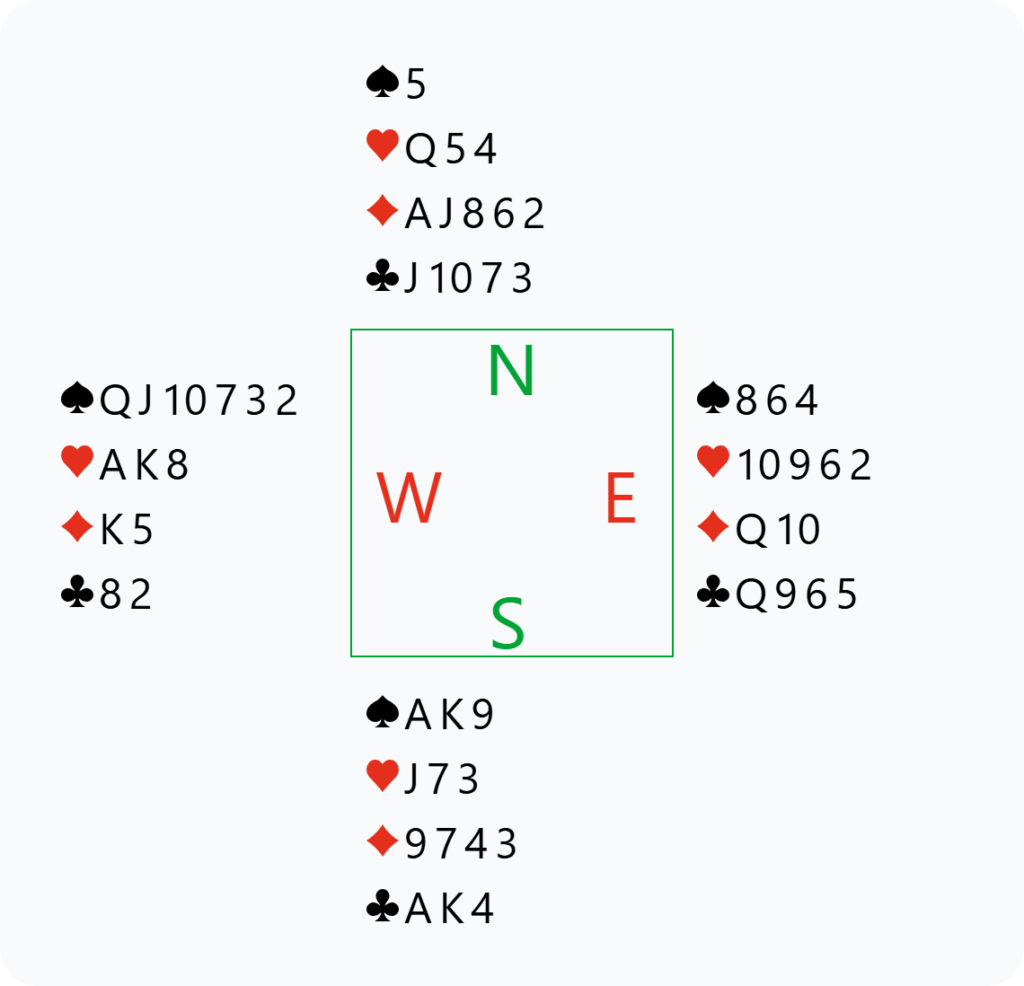
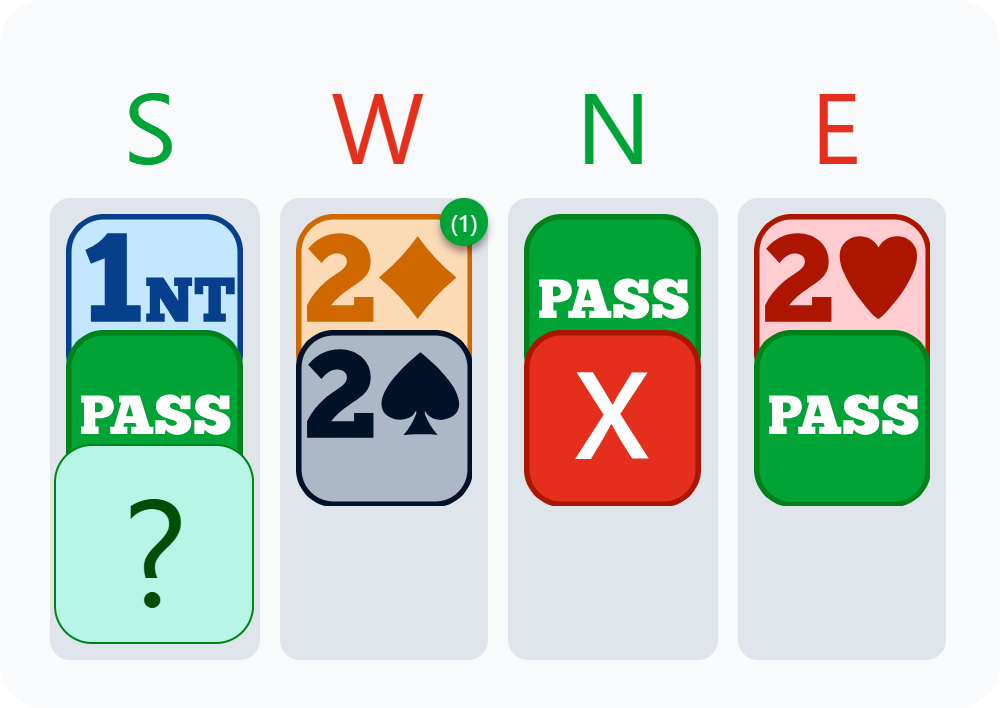
The 2♦ overcall shows a six-card major. In North, I start by passing, since doubling 2♦ would have a penalty-oriented meaning. East bids 2♥, which means: “pass if you have hearts, correct to 2♠ if you have spades.” West duly corrects to 2♠.
I then decide to double — a take-out double, which I find more appealing than bidding 2NT for the minors. This approach allows my partner to pass the double if she has spades, while still leaving us the option of finding a possible 5-3 heart fit. For the record, if Nathalie were to bid 2NT over my take-out double, it would be up to me to choose which minor to play in.
Nathalie is now faced with a delicate decision holding a 4333 hand with 15 HCPs. She makes an excellent decision at pairs: she passes. She has four defensive tricks, the vulnerability is favourable as the opponents are red, and bidding 3♦ with such an ultra-balanced hand would be highly problematic. She therefore makes the sensible assumption that 2♠ will often go down.
On inspection, the contract goes down by one trick by the narrowest of margins: we make two spade tricks, two club tricks, one heart trick and one diamond trick. In teams matches, passing would be too risky, but at pairs it’s a very sound option. In fact, the same decision was taken at several other tables.
Provisional rankings after the first weekend
After the first two sessions, here’s the provisional top 3:
- Gaëlle Beineix – Jean-Marie Pallier: 58.35%
- Nathalie Frey – Pierre Bedouet: 55.65%
- Pauline Schmidt – Pierre Schmidt: 55.30%
And since this article is co-written by Pierre, Léo and myself, we are of course keeping a close eye on our own performances: Luc and I are 11th with 51.91%, while Anaïs Leleu – Léo Rombaut are 10th with 52.21%.
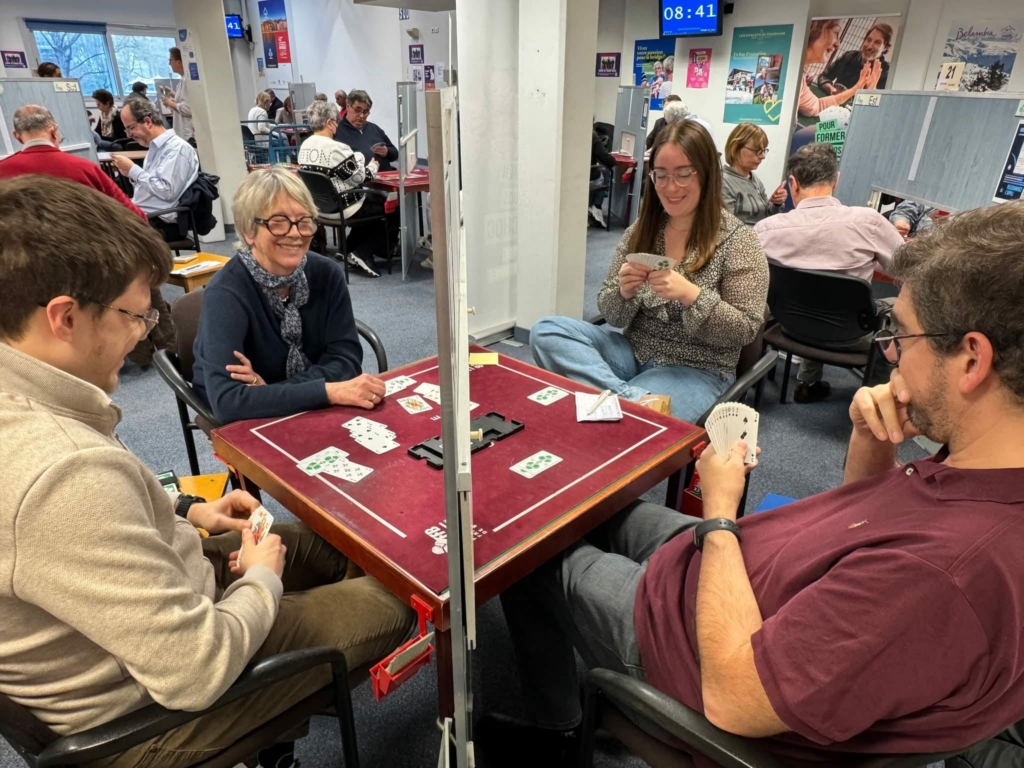
Second weekend: ambitious bidding choices
We now continue with two deals played during the second and final weekend, still in the same vein as my first deal: high-level decisions. This deal is interesting for everyone at the table. We are playing against Isabelle Bello and Cédric Lorenzini, the pair who will finish third. I’m sitting West, and the auction goes as follows: 1♥ by North, 3♠ by East, 4♠ by South.
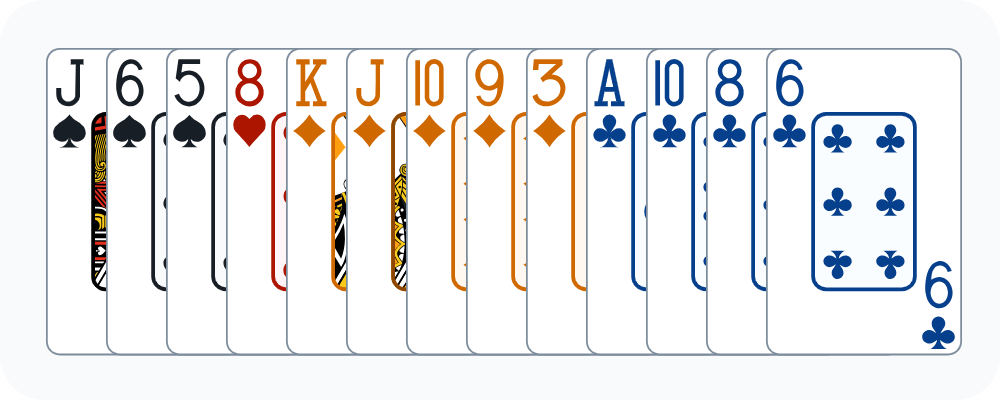
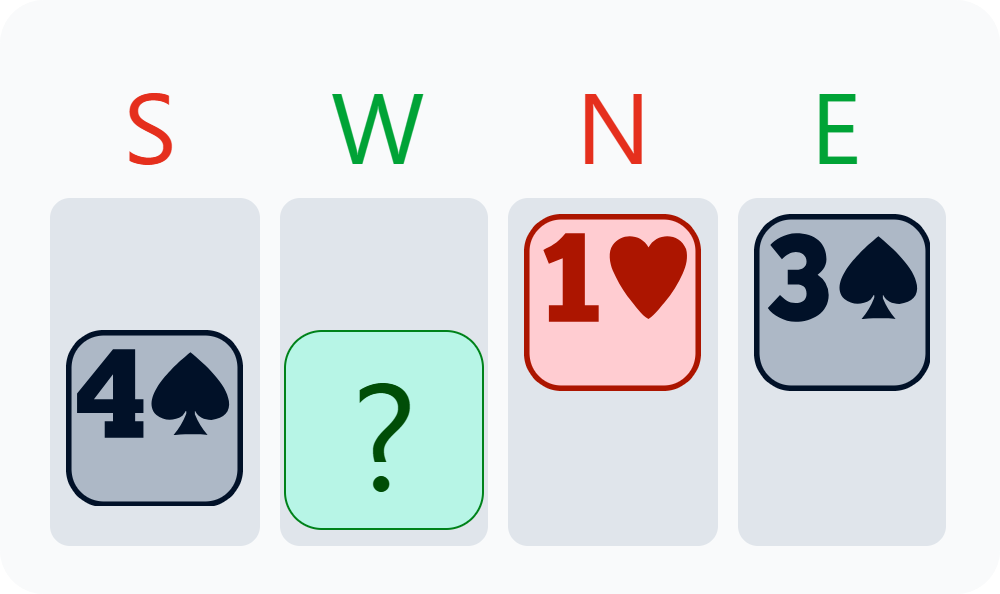
At this point, I have the choice between 5♠, to pre-empt as much as possible, and 5♦, to guide the opening lead.
I choose 5♠, as I also have some extra clubs, and I’m not particularly keen on pointing the defence towards an opposing slam: I have only one and a half defensive tricks.
North eventually bids 6♥, and Luc, encouraged by my 5♠ support, decides to sacrifice in 6♠, having no defensive tricks at all.
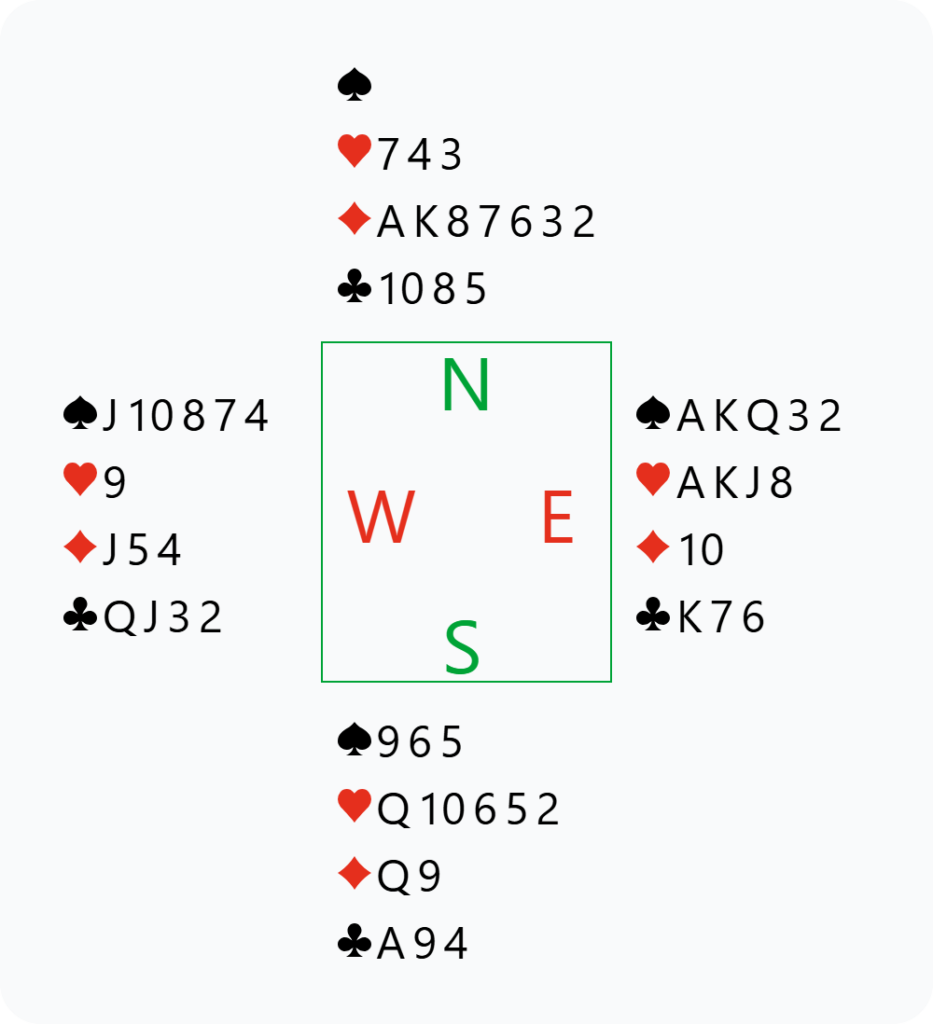
On this deal, still against Isabelle and Cédric, the key bid is in East, with Luc’s hand. The sequence begins 1♠ – pass – 4♠ – 5♦. With few losers, one can imagine partner holding some extra club values, which would open the door to a slam.
The only bid that allows partner to assess his hand is therefore 5♥, since 5♠ would be competitive and a double would clearly be for penalties.
With the hand I have, however, it’s obvious that any slam ambitions must be rejected: I have already shown a shortage by jumping to 4♠, and I have no significant extra values to offer. We therefore settle for 5♠ making.
Let’s finish with two deals from Pierre
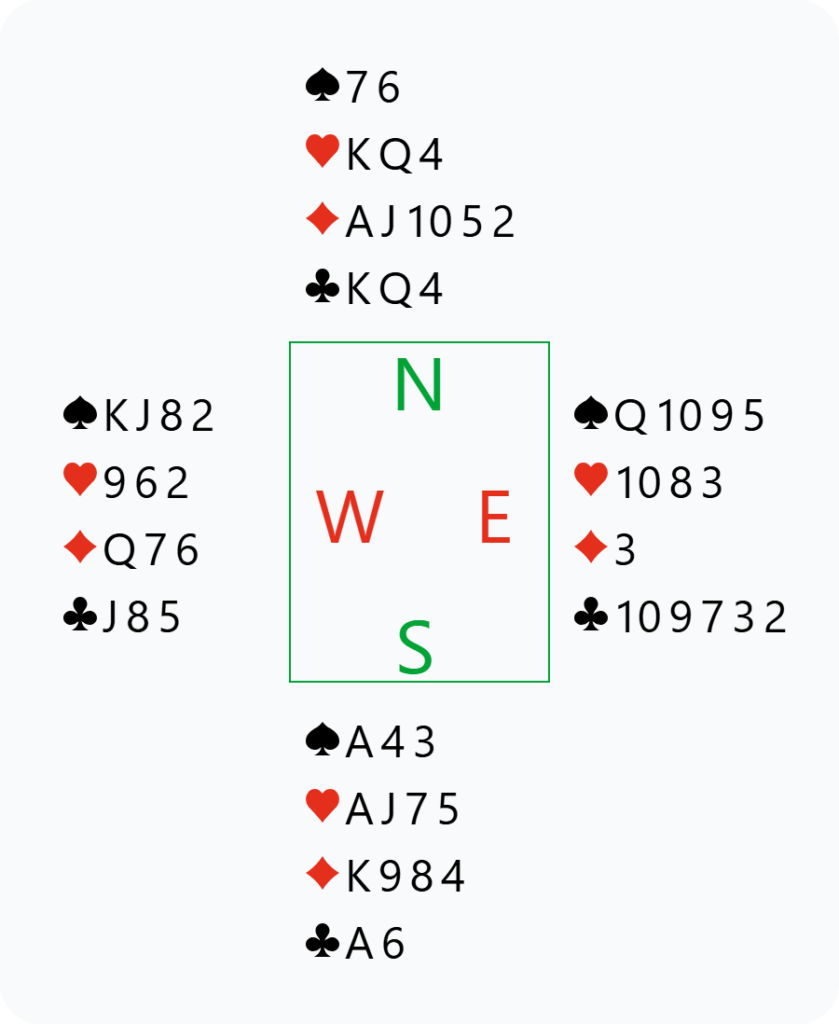
What should North say over South’s 1NT?
With my 15 HCPs, a good five-card suit and my points concentrated in clubs and hearts, I consider my hand too strong to bid 3NT. I assess it as closer to 16 HCPs, so I decide to bid a quantitative 4NT. Nathalie, holding 16 HCPs herself, chooses to accept my invitation and signs off in 6NT.
In general, the correct approach against this type of contract is to lead passively. With West’s hand, holding 7 HCPs, you assume that partner has 0 points, all the more reason to opt for a neutral lead. West decides to lead the 2 of hearts (odd-even signalling against 6NT), and Nathalie makes the contract by playing the king of diamonds, then the ace. She gives away the queen of diamonds to the opponents.
It’s worth noting that the 6♦ contract is excellent, even on a spade lead. You win with the ace of spades, then cash the diamonds from the top. If the queen does not show up, you can play four rounds of hearts, discarding your losing spade and hoping that the player holding the last trump has at least three hearts (Guillemard’s manoeuvre).
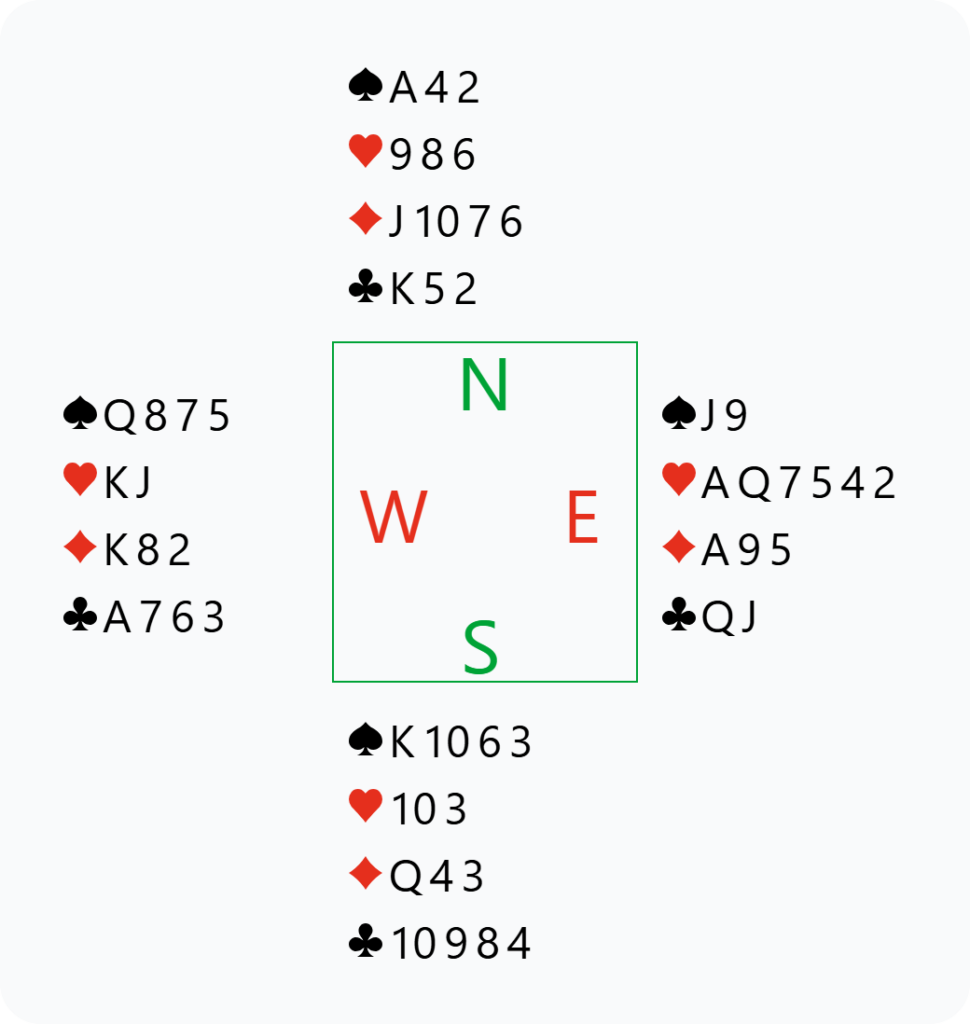
Would you make the same bid as Nathalie? You have two options: bid 4♥, a pragmatic choice, or play the 3NT contract. The advantage of 4♥ is that it keeps things simple. Nathalie, who enjoys playing in 3NT (a habit shared by my partners), preferred that option.
Her reasoning was as follows:
I hold a very nice complementary holding in hearts and stoppers in the other suits. I also want to protect my king of diamonds on the opening lead and, finally, at pairs this choice can score better. I therefore decide to sign off in 3NT.
The opponent leads the jack of diamonds. Nathalie wins the lead with the ace of diamonds and tries the club finesse, which fails. On lead, North continues with a diamond to Nathalie’s king, who then plays a club to the jack (to avoid a blockage). She crosses back to her hand with the king of hearts, then cashes the ace of clubs (not to be forgotten), and finally overtakes the jack of hearts with the queen, for a total of ten tricks. Some very nice play! In the 4♥ contract, you would lose two spades and the king of clubs. An excellent decision!
Final rankings: the favourites confirmed their status
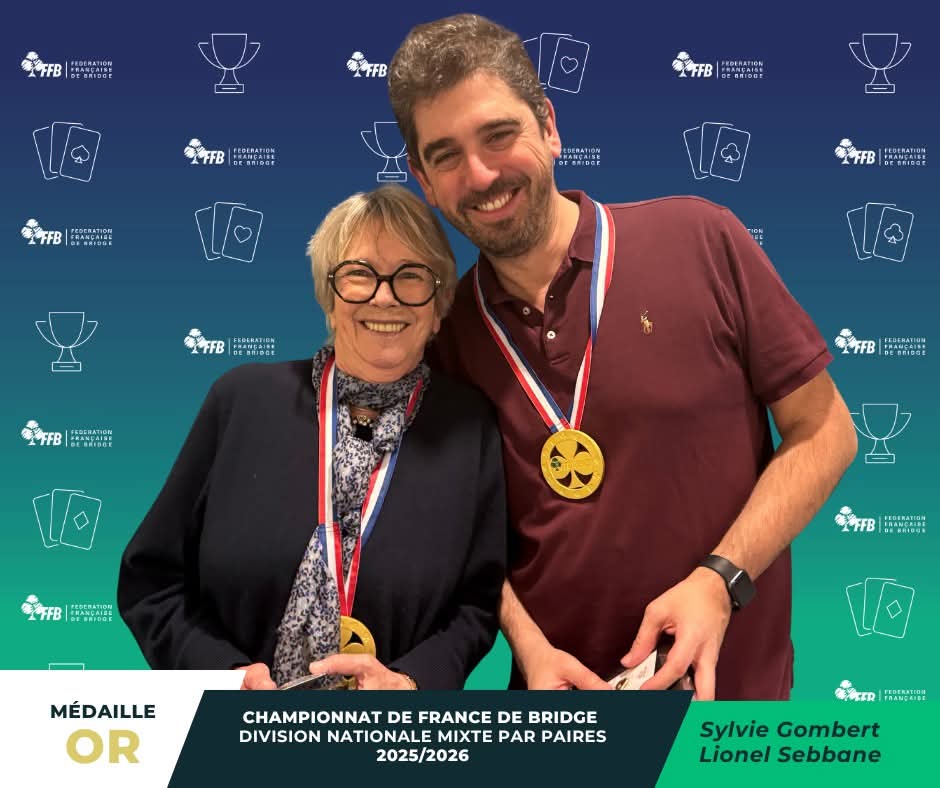
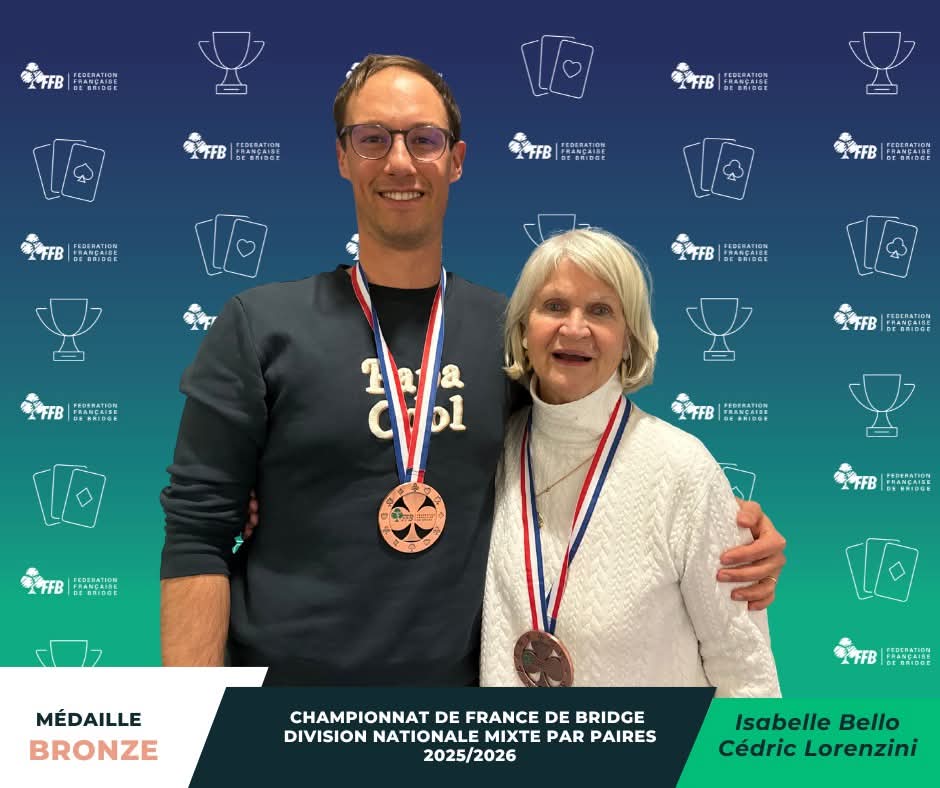
At the end of the four sessions, this year’s podium is: Sylvie Gombert – Lionel Sebbane ahead of Donatella Halfon – Philippe Cronier, with Isabelle Bello – Cédric Lorenzini completing the podium.
As for us, Pierre – Nathalie and Luc – myself finished around tenth place, a result that fairly reflects our level of play over the whole competition, marked by a few missed opportunities to do even better.

What did you think of this collaborative article?
Leave us a comment. We’re always happy to read your feedback! ♥