

Playing in a minor: part-score contracts


by Michel Bessis, Philippe Cronier & Jean-Christophe Quantin
In this new three-part series, we will look at when and how we prefer to play in a minor suit rather than in no-trump. We will first study part-scores, then games, and finally slams.
What types of hands should encourage us to choose a minor suit as trumps? What mechanisms make it possible to do so?
Summary
Direct raises in the minors
And after a natural overcall?
After a 1NT opening: Minor suit transfers
The false Check-back
Exercises
There’s more to Bridge than bidding
Direct raises in the minors
a) The simple raise
A raise of the opening minor to the two-level guarantees five cards (sometimes only four, especially in diamonds) and denies a four-card major, which should be shown first. It indicates a hand in the 6–10 HCP range, including distribution.
Be careful: do not automatically raise to 2♣ just because you hold five-card support. Carefully examine the shape of your hand and the concentration or dispersion of your honors.
Principle: with a balanced hand and distributed honors, you should prefer answering 1NT.
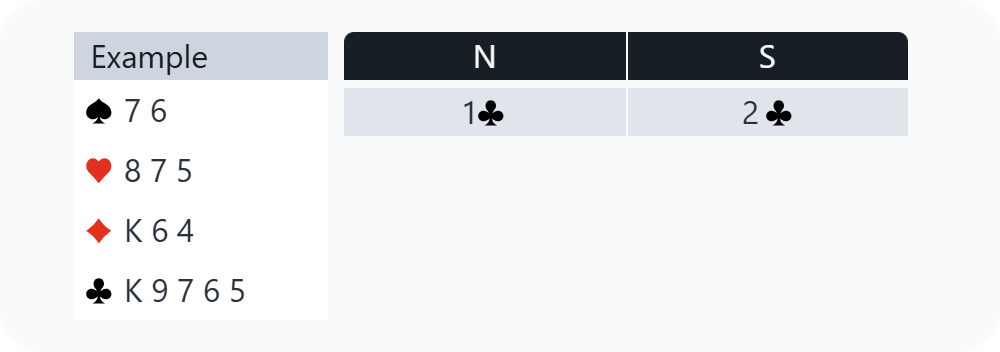
You have 0 points in the majors and a decent Club suit, headed by a King. Go for the direct raise.
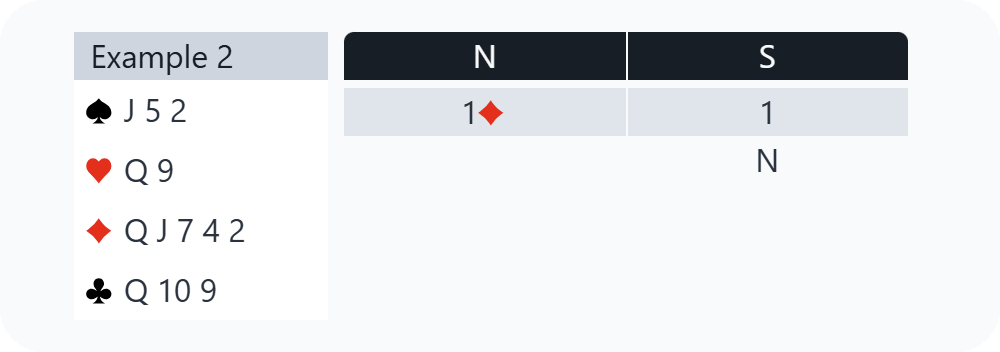
This time, you have small honors, scattered over all suits including the majors where Jack-third and Queen-doubleton constitute potential stoppers. You should prefer No-trump.
You need a Funbridge Premium+ subscription to keep reading.
To keep reading this article, please log in with a Premium+ account.