Responder's rebid
Responder's rebid: bidding a third suit
Third-suit forcing is a bid used after opener's rebid of his opening suit.
It consists of bidding a new suit. This bid shows at least 10 points and often 5 cards in the responded major and 4 cards in the new suit.
It asks partner if he has 3 cards in the responded major (finding the fit) or a stopper in the last suit (we would be able to bid NT since we would have all 4 suits).
Example:
It consists of bidding a new suit. This bid shows at least 10 points and often 5 cards in the responded major and 4 cards in the new suit.
It asks partner if he has 3 cards in the responded major (finding the fit) or a stopper in the last suit (we would be able to bid NT since we would have all 4 suits).
Example:
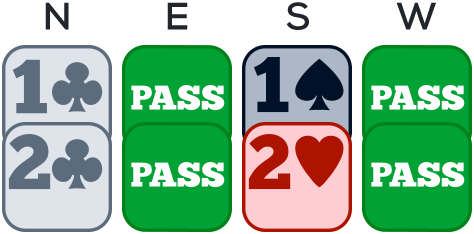
5 4 10+ HCP
Question: Partner, do you have 3 cards in Spades or 4 cards in Hearts? If not, do you have a stopper in Diamonds?
Question: Partner, do you have 3 cards in Spades or 4 cards in Hearts? If not, do you have a stopper in Diamonds?
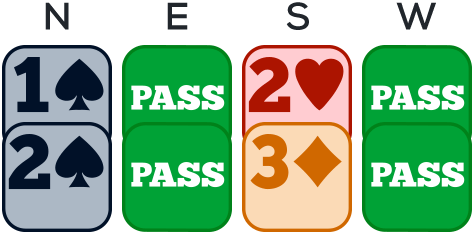
5 4 12+ HCP
Question: Partner, do you have 3 cards in Hearts? If not, do you have a stopper in Clubs?
Question: Partner, do you have 3 cards in Hearts? If not, do you have a stopper in Clubs?
Important rule: With enough points for game, if your partner has promised a balanced hand, you can bid 3NT, even with two small cards in a suit. But if he has an unbalanced hand, it is better to check that he has a stopper. Otherwise, you are likely to see the opponents take the first 5 tricks.
Discarding
An opponent is playing a suit in which you have no cards left and you can't or don't want to ruff. You should discard.
Which card are you going to choose?
Does this card convey a message to your partner?
The number one concern for a player who is discarding is: not to give a trick away to the opponent or waste a trick for one's side.
Like when leading in a suit contract, the card to discard will often be chosen "by default": ruling out discarding certain suits, you will choose a different suit.
Why might you not be able to discard certain suits?
Because one of your honours would be left vulnerable. Holdings like King-second* (Kx*), Queen-third* (Qxx) or Jack-fourth* (Jxxx) can't survive being discarded from because your honours are therefore no longer guarded. If you discard a small card from a Queen-third holding, you are likely to see your opponent play the Ace and the King, thus picking up your Queen:
Which card are you going to choose?
Does this card convey a message to your partner?
The number one concern for a player who is discarding is: not to give a trick away to the opponent or waste a trick for one's side.
Like when leading in a suit contract, the card to discard will often be chosen "by default": ruling out discarding certain suits, you will choose a different suit.
Why might you not be able to discard certain suits?
Because one of your honours would be left vulnerable. Holdings like King-second* (Kx*), Queen-third* (Qxx) or Jack-fourth* (Jxxx) can't survive being discarded from because your honours are therefore no longer guarded. If you discard a small card from a Queen-third holding, you are likely to see your opponent play the Ace and the King, thus picking up your Queen:
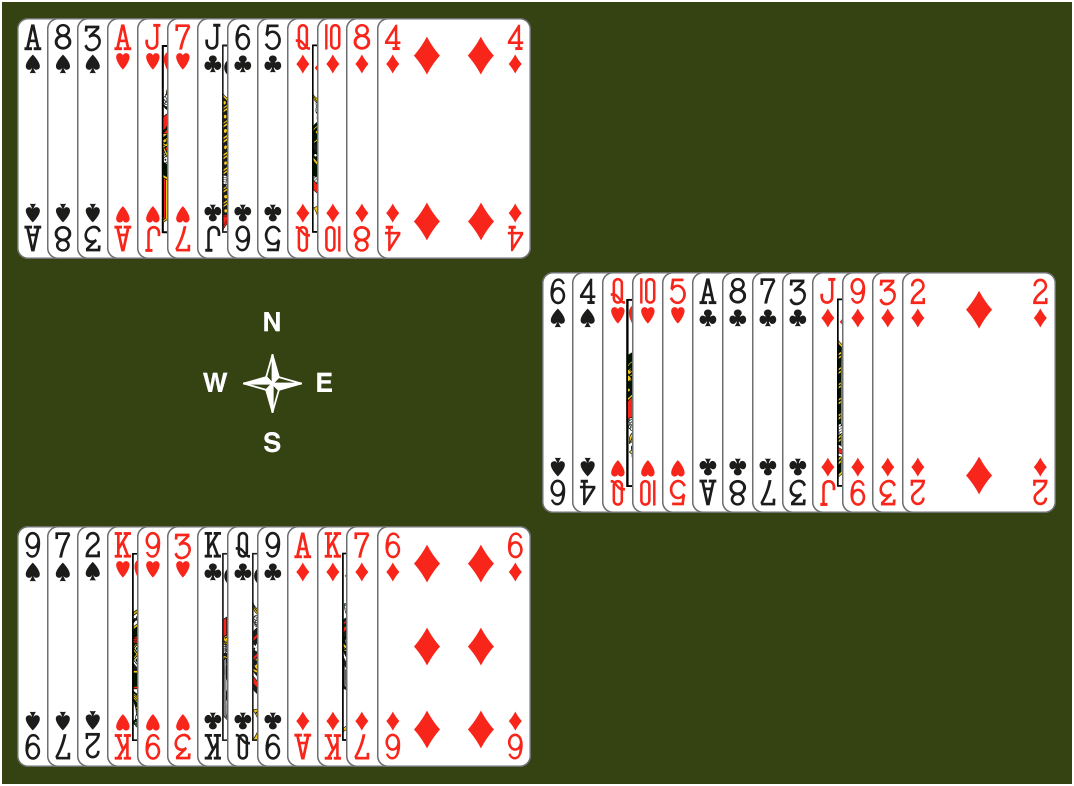
You are defending a
contract as East.
Your partner leads the King of . The opponent ducks and then holds up again on your partner's Queen of Spades. On the third round of , you should discard. Discarding a small or being ruled out, you should discard a small .
In rare situations, most often against suit contracts, discarding a high card will oblige one’s partner to return that suit:
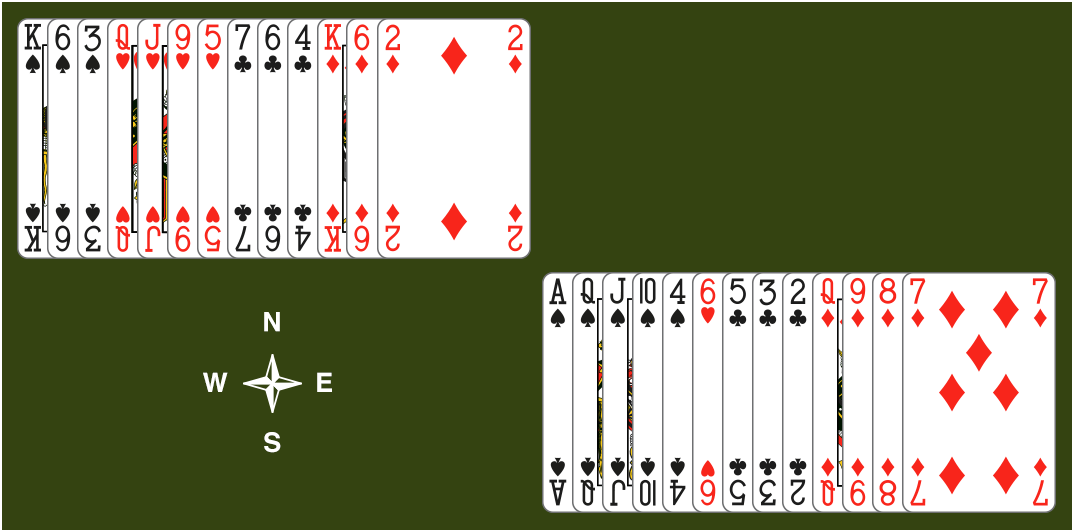
You are defending a
contract as East.
Your partner leads the King of Clubs. The opponent takes it with the Ace and plays a heart to dummy's Queen. He wins the trick and plays the 5 of … You have to discard the Queen of . You clearly hold the rest of the sequence (the Jack and the 10) and are inviting your partner to return the suit. Please also note that this discard doesn't cost any tricks, since thanks to the power of the ruff, you can never take more than 3 tricks in .
Blocking
When you can count enough sure and immediate winners to make the contract, it is time to take your tricks.
You will therefore have to overcome communication issues where they can be solved.
Simply playing the cards in the suit can pose problems if you play the wrong honour first:
You will therefore have to overcome communication issues where they can be solved.
Simply playing the cards in the suit can pose problems if you play the wrong honour first:
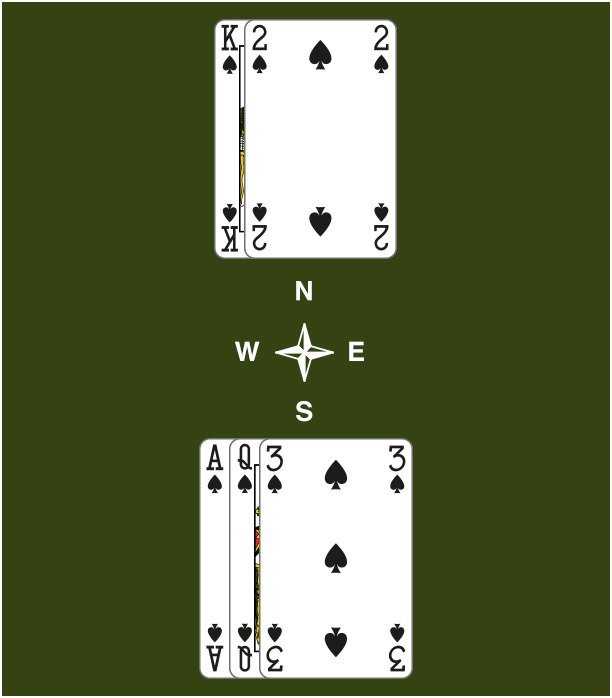
The Ace, King and Queen are equivalent cards, i.e. of the same rank.
But if you play the Ace first (or the 2 to the Ace) and then the 3 to the King, you block the Queen in South.
To take your 3 tricks without any communication issues, play the King first, then the Ace and the Queen.
If there is no other problem, play the honours in the short hand first.
This piece of advice can also be summarised as follows: stiff honour
But if you play the Ace first (or the 2 to the Ace) and then the 3 to the King, you block the Queen in South.
To take your 3 tricks without any communication issues, play the King first, then the Ace and the Queen.
If there is no other problem, play the honours in the short hand first.
This piece of advice can also be summarised as follows: stiff honour
The situation is the same when you have a higher number of cards:
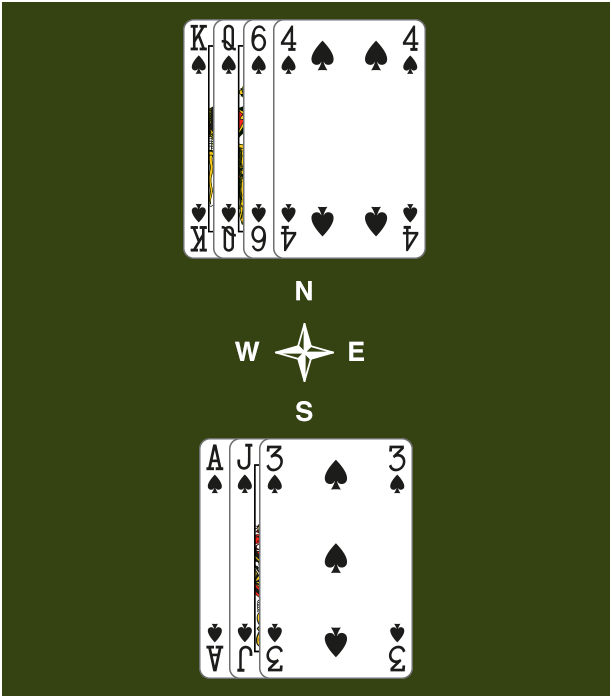
Play the Ace and the Jack first.
These communication problems can be encountered when promoting high cards:
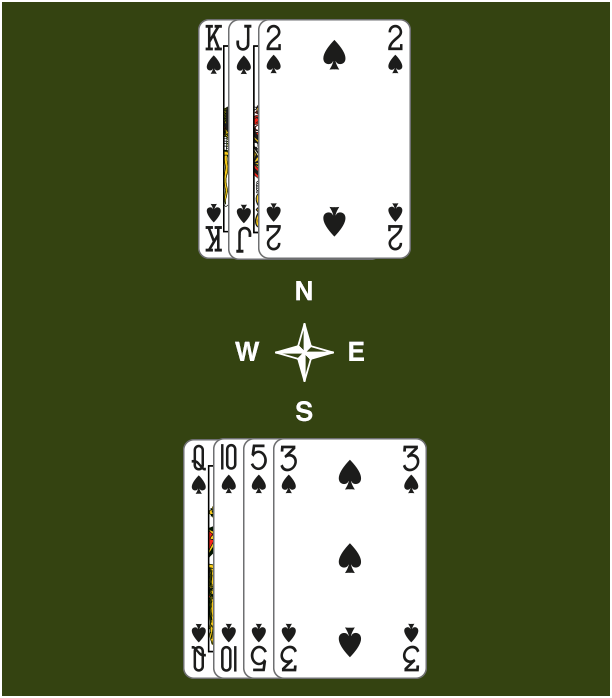
Play the King first, then the Jack.
Sometimes the suit will be irrevocably blocked:
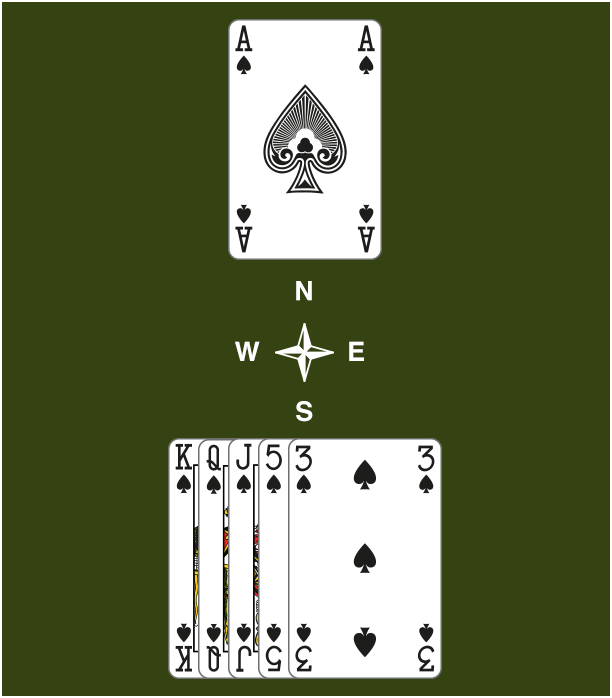
With no communications in another suit, you won't be able to cash the honours from South's hand.
At other times you will have to sacrifice an honour to unblock the suit:
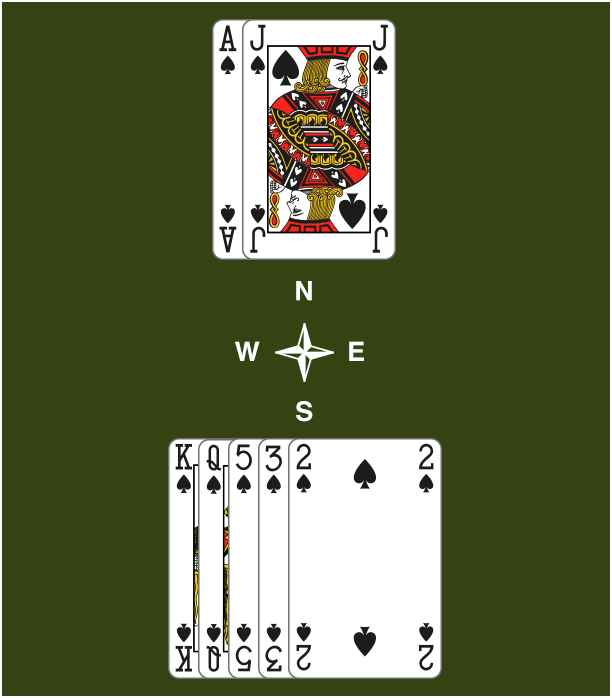
With no other communications, play the Ace to the 2, then take the Jack with the King.