


Who said that only grand champions could write bridge articles? A few months ago, Funbridge launched a brand-new format of articles that allow talented players to share their expertise on the deals that inspire them the most. We have the pleasure of presenting you with a captivating article below that was written by one of the members of our community.
Zoom in on the author
Yoram Aviram is an experienced bridge player and a former member of the Israeli Junior and Open teams with several achievements on the national and international scenes.
Yoram left the game many years ago to focus on family and work (in the field of computerised trading of financial instruments) and switching hobbies from the mind sport of bridge to the physical sport of competitive road cycling.
He returned to his old passion and adopted Funbridge as the platform on which to refresh his old skills.
He is happy to share deals of particular interest with the Funbridge community on the blog.

At bridge, you are usually taught to play the cards, not the opponent. Occasionally, however, the opponent becomes the most important card of all.
🏆 Tournament Overview
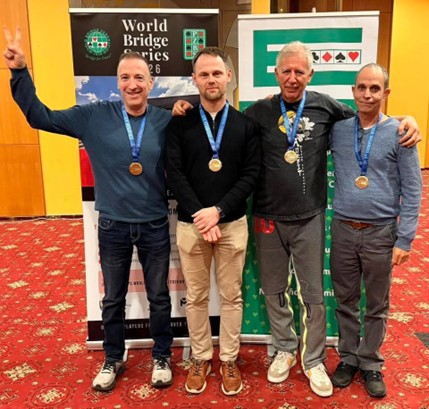
I had the pleasure of playing in the 2026 Transnational Winter Games in Prague. Our team consisted of Zack-Ginossar – top Israeli international players, Pachtman-Zatorski – a mixed Israeli-Polish pair, probably among the best pairs in the world these days; and my partner and I – Althsuler–Aviram – the old guys of the team.
The tournament began with a Swiss stage, from which 32 teams (around 40% of the field) would qualify for a knockout rounds. Our team made the cut, then won the first knockout match, but lost in the round of 16 to a top Polish team.
The knocked-out teams joined the Swiss tournament. That event went very well for us. We stayed at the top of the rankings throughout, winning all but one match and eventually taking the gold medal.
💥 Facing the Best
The field included many great players, and several famous names. In a Swiss format, teams always face opponents with similar rankings, so being near the top meant we encountered many strong teams. One of them was the Zimerman team – arguably the most successful team in the world over the last decade.
At our table we faced Zimerman-Multon. Here is one of the deals we played.
These were my cards as East:
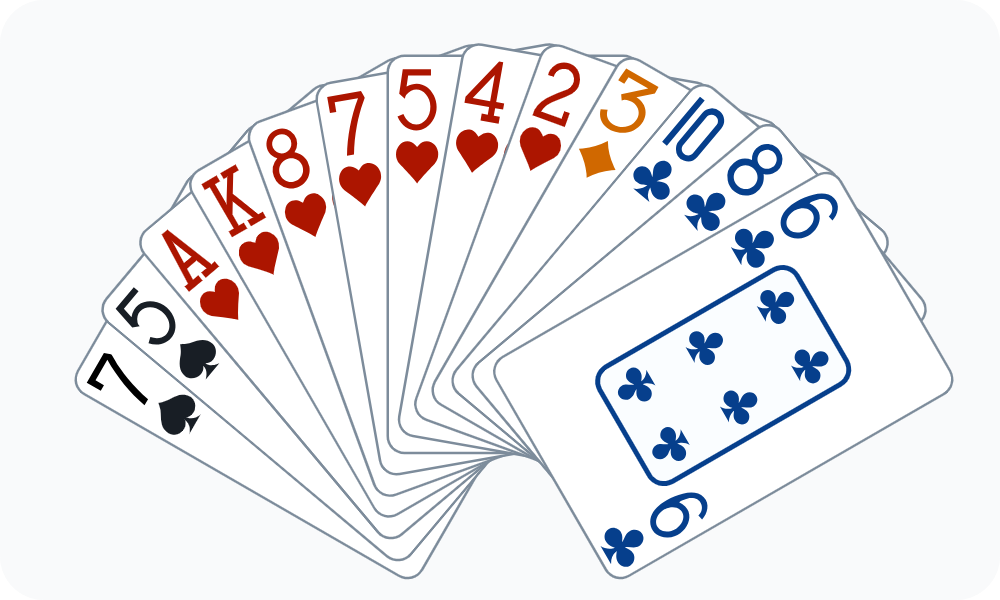
South, on my left, passed as dealer. Partner opened 1♦ and I promptly jumped to 4♥, ending the auction.
South led the ♠6, and partner put down a less than great dummy:
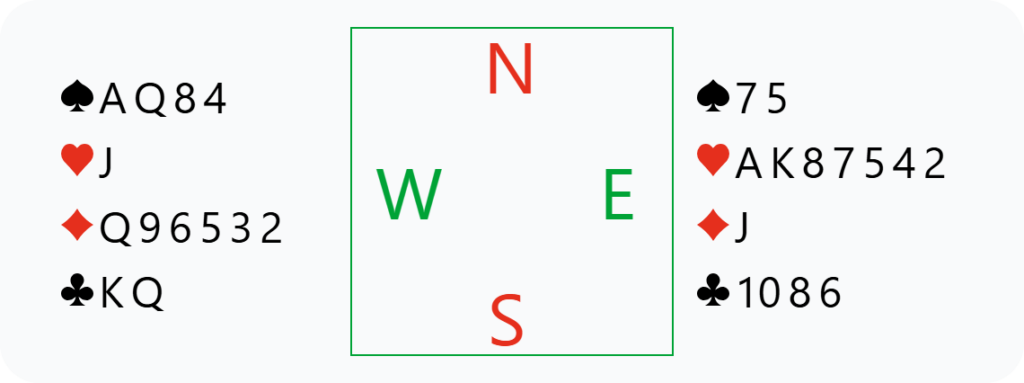
With 3 certain losers (two aces and a trump) prospects seemed grim. I tried the ♠Q from dummy, but north won with the King.
North returned a small heart. With little hope, I played low from hand and was surprised to see south follow low as well, allowing dummy’s J to win.
That was encouraging, but I was still facing four losers: the spade King, two minor-suit aces and most likely a second club. My only chance was to somehow develop a diamond trick.
Accordingly, I played a diamond from dummy. North followed low, and my J lost to South’s ace. South continued with the ♣A and another club, everyone following low, exposing my second club loser.
This was the position with dummy to play:
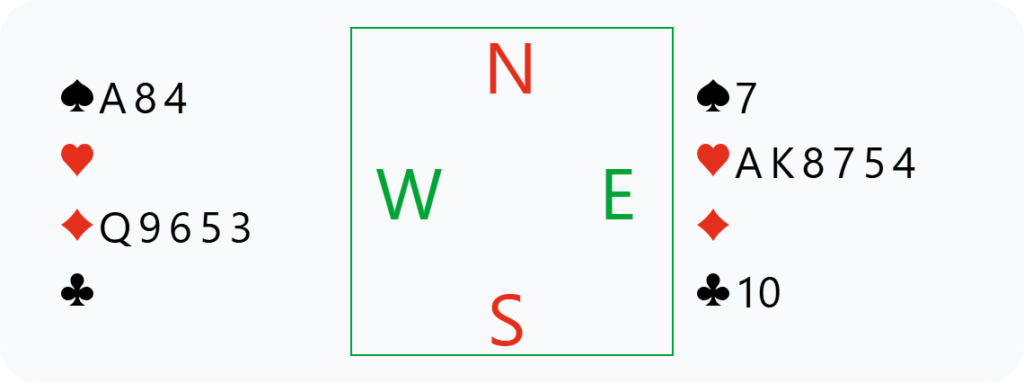
The Problem
How could I develop a diamond trick?
One possibility was that the ♦K drops when I ruff a diamond in hand. Another was that south held only the ♦10 remaining; if so, playing the queen from dummy will do the trick.
Both chances were slim, but which was more likely?
First question: Who holds the ♦K?
South has shown the ace and had not led the suit. That was a clue. Moreover, the fact that south won the ace suggested, by restricted choice, that north was more likely to hold the King.
So, I assumed the diamond K was with north.
To make the contract I needed the initial diamonds to be divided either K4 with north, or A10 with south.
I pondered for a moment and then realized a real clue available!
If north indeed held K4 of diamonds, he could defeat the contract by rising with the King on the first diamond played from dummy. Admittedly, playing an unsupported King second hand is not a natural play, but in this case, there was a strong inference: after my direct jump to 4♥ over partners opening, I was unlikely to hold the ♦A. With long hearts headed by AK and the diamond ace the hand would be too strong for that bid.
So, the real question became:
Is north good enough to hop with the King?
And the answer was obvious: of course! Multon would do that in a cinch!
Accordingly, I played the ♦Q from dummy.
Multon, without hesitation, followed low, I hopefully discarded my club loser, and Zimerman, with visible revulsion, dropped the 10.
I now returned to hand with a spade ruff, kindly asked opponents if the hearts were breaking. They muttered something and dropped their cards.
Contract made!
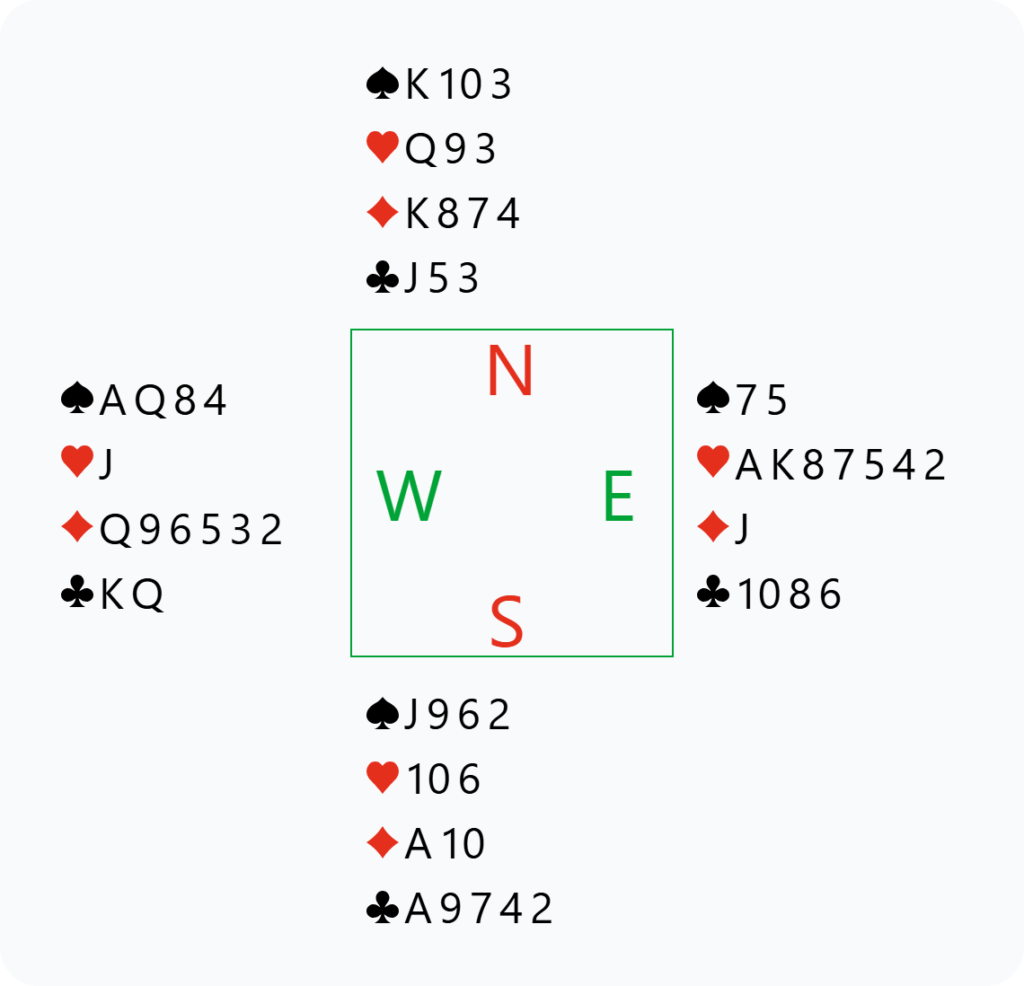
The full deal:
Post-Mortem
In retrospect it is easy to criticize North’s small heart return at trick two, but I believe his play was correct. Declarer might need to ruff a club in dummy, so returning a trump from his side made sense. But which trump? With all hands visible, we see the ♥Q play is safe, but from north’s perspective the queen could easily cost a trick if declarer’s held heart holdings such as: AK10xxxxx, A10xxxxx(x) or K10xxxxxx.
The small heart play only loses in the actual layout, so Multon’s play was quite reasonable.
Declarer’s success on this hand depended on a clue that works only against a very good player. It is rather amusing to realize that a player’s reputation can sometimes pay off – for the opponent.
What is the concept behind community articles?
Would you also like to write an article? At Funbridge, we like giving our players a voice. In this format of articles, it is you who write the content. If you notice a deal that you find particularly interesting and that you would like to share with the Funbridge community, tell us in a comment below! We will get back to you quickly.

Content Manager
What did you think of this article?
Share your opinion in the Comments section below.
A very informative and interesting article! More please.
Aggressive bidding pays off, especially when you analyse the possibilities as well as Aviram. North’s small heart return is questionable though.
Dirk Kemp
Loved it! More please!